
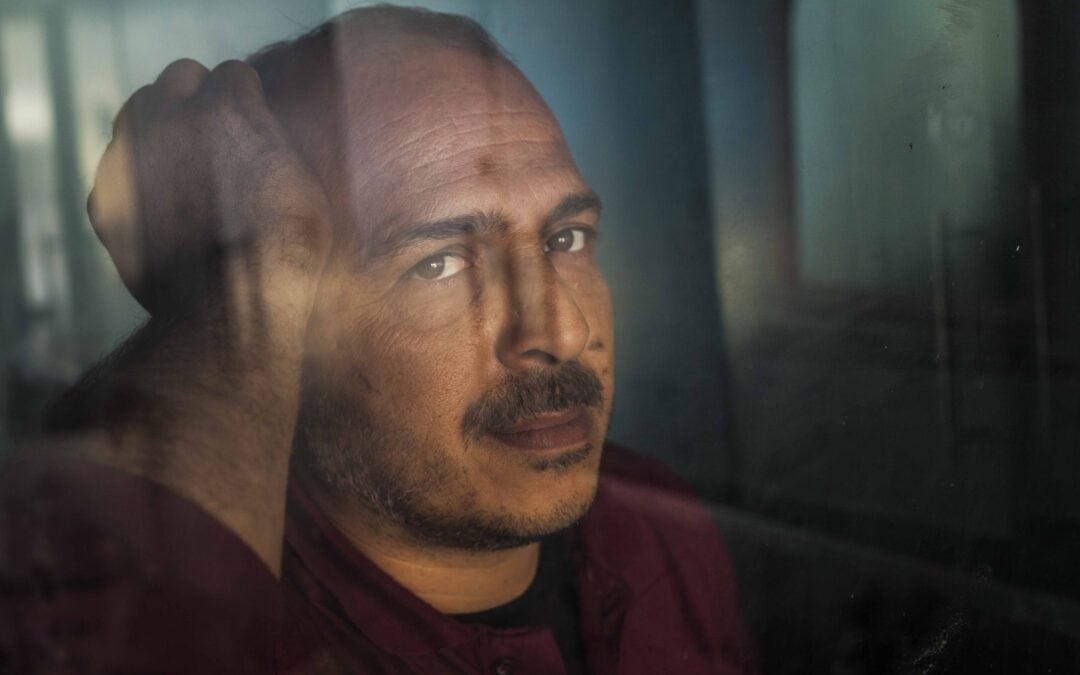
Living with the Fear of Recurrence
Living with cancer often means living with uncertainty, and for many patients, that uncertainty shows up as fear of recurrence and the very real stress of upcoming scans, tests, and follow-up appointments. In his introduction for the most recent Men Speaking Freely on June 4th, Dr. John provides a great summary of the Fear of Cancer Recurrence:
I thought I’d take a new look at a favorite topic of ours, Fear of Recurrence. Here is an update from recent literature.
Not that we need a definition, but FCR is defined in the literature as the fear, worry, or concern that cancer will return or progress. It’s among the most common and persistent concerns for cancer survivors, including men with prostate cancer. It seriously affects our quality of life, mental health, and even relationships.
Recent studies confirm that at least half of cancer survivors experience moderate to high FCR, with 10–20% experiencing severe, disabling FCR. Younger age, female gender, recent diagnosis, low social support, poor physical condition, and previous psychological difficulties are risk factors for higher FCR in general. For prostate cancer, younger patients and those with PSA increases or ambiguous test results are at higher risk. Of course, men may underreport FCR due to stigma or stoicism (fancy word for being stupid).
Cognitive Behavioral Therapy (CBT) and Mindfulness-Based Interventions are still the most evidence-based approaches. New trials support the efficacy of both in reducing FCR, including when delivered via telehealth.
Structured interventions like ConquerFear (iConquerFear) and SWORD (Survivors’ Worry Reduction) are scientifically validated in multiple countries and are worth looking at. There’s supposed to be an Australian intervention called iCanADAPT for prostate cancer, but I can’t seem to navigate to it from icandapt.adaptcancer.org.
au. Meta-analyses show modest benefit for these interventions, with high patient acceptability.
Medications addressing fear of recurrence are still not supported as primary treatment, but they sure got me by those early months without adverse effects.
The International Psycho-Oncology Society and ASCO survivorship guidelines, as well as recent research, recommend regular assessment and referral for FCR. Tools like the Fear of Cancer Recurrence Inventory (FCRI), FCR-7, and Cancer Worry Scale are available, but I’ve never heard of anyone being screened. Wake up, docs.
On the horizon, studies are examining genetics, inflammation, and personality traits as predictors of FCR. Interventions are becoming culture-specific.
So, FCR is normal, and severe/persistent FCR is treatable. Routine discussion and screening for FCR should be part of survivorship care. Effective interventions (CBT, mindfulness, research-based web-based programs) are available and increasingly accessible. Patients should not hesitate to raise FCR concerns – help is available.
-Dr. John Antonucci MD
With thanks to one of our own, Andy Douglas, a recent webinar from Smilow Cancer Hospital at Yale, part of its Survivorship Series, goes into far more detail and is worth watching. In Unraveling Fear of Cancer Recurrence: Realities and Tools for Coping (https://www.youtube.com/watch?v=27aHVlFsgN4), presenters Gabriel Cartagena, PhD, Angela Khairallah, MSW, LCSW, and Susanne Lee-Baldassini, LCSW, examine fear of cancer recurrence and “scanxiety,” explaining how common these experiences are and offering practical coping strategies for managing them.
Not everyone will experience fear of cancer recurrence or scan-related anxiety in the same way, but these concerns are common across the cancer community. This webinar will not make uncertainty disappear, but it does offer grounded, practical tools that can help patients and families navigate it with more confidence. If you’re struggling with anxiety, read the recent Substack post by Howard Hertz: Anxiety and the Miscalibrated Mind. Hertz breaks down how our brains are evolutionarily hard-wired to prioritize survival over factual accuracy, meaning your brain would rather make the mistake of feeling anxious than risk being caught off guard.
-Dan Gifford
Watch Here: