
Written by: Dr. John Antonucci
As we always emphasize, taking care of our hearts (the actual organ) is very important to us PCa guys. For metastatic men, a very substantial minority of us will die of heart disease before our PCa gets us. For non-metastatic, more than half will.
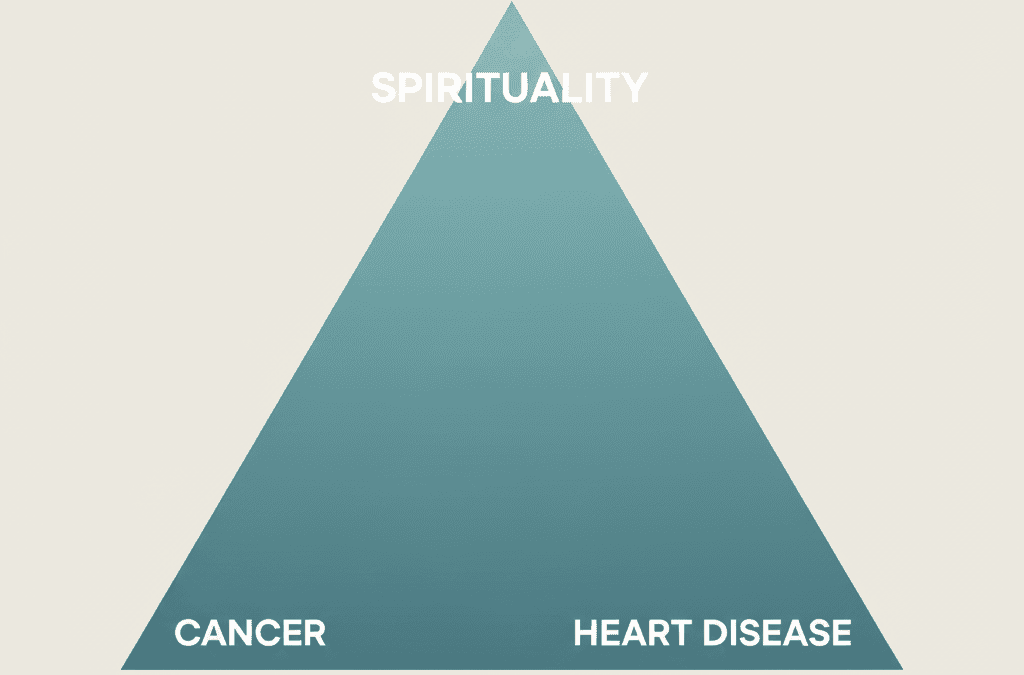
So when Rick saw an article about the Cardiology Society of Sao Paulo devoting a seminar to Spirituality in the treatment of heart disease, he sent it right over to me with a suggestion to make it an invitation. The cardiologists reported that there are spiritual factors that benefit cardiovascular health, reduce cardiac hospitalizations, lower blood pressure, and even improve survival.
The “spiritual” factors the Sao Paulo group discussed are things like purpose in life, gratitude, hope, and “moral, emotional, and mental values that shape an individual’s behavior and decision-making.”
“Spirituality cuts across and transcends a person’s life, shaping their choices and way of living.” There are scales to measure spirituality for research purposes.* High scores on these scales correlate with the “depth of spirituality” with less hypertension, better cardiac output, better compliance with treatments, lower levels of fight-or-flight nervous activity, lower stress hormones, less inflammation, fewer hospitalizations, less anger, less anxiety, and longer life. Actual heart attacks are linked to acute stress, and spirituality helps lower that risk.
Treatment for spiritual distress has been tried. In one study, videos about spiritual reflection, gratitude, forgiveness, life purpose, and optimism produced drops in BP and better blood vessel endothelial function.
Since there is an overlap between “spirituality” and “religiosity”, several studies have separated the two, and the benefits described above do not extend to “religious” practices like attendance at services, religious rituals, or structured participation in a religion.
It is the same for cancer; research shows that spirituality plays a significant role in cancer. Spirituality practices made their way into Palliative Care Medicine years ago, particularly in end-of-life care and acceptance. “Spiritual distress,” however defined, is very common in cancer patients. And patients believe that their healthcare providers should consider their spiritual needs, and that this is often not done.
Let’s look in the NCCN and ASCO** cancer treatment guidelines for the word “spirituality”:
NCCN now has a “distress management” section where they recommend screening for distress, including spiritual concerns, as part of routine oncology care. If spiritual or existential concerns are found, they encourage referral to chaplains, spiritual counselors, or mental health professionals trained in spiritual issues. NCCN states that spirituality practices can improve quality of life, coping strategies, and treatment adherence.
ASCO also calls for psycho-social screening in oncologic care, which should encompass spiritual health. They advocate addressing spiritual concerns as an integral part of supportive care, and encourage open communication about spiritual and existential concerns, respecting patient preferences and cultural backgrounds.
Neither group provides detailed protocols for spirituality practices like they do for, say, chemotherapy, but both call for the integration of spiritual assessment and support in cancer care. They acknowledge that addressing spiritual needs can improve emotional well-being, coping, and overall quality of life for cancer patients.
We in MSF are wary of discussing religion. However, both cardiology and oncology sources separate religion from spirituality. It seems we should tactfully inquire about this together, since it is correlated with cardiac and oncologic outcomes and quality of life.
*We don’t have to use other folks’ definitions of spirituality, but here are a few of the assessments you can try out:
- ONC-5 chaplain assessment of explicit spiritual concerns in cancer patients: https://www.youtube.com/watch?v=hhlJKPsBSqE
- FICA spiritual assessment tool: https://coalitionccc.org/CCCC/CCCC/Resources/FICA-Spiritual-Assessment-Tool.aspx
- https://spiritualityandhealth.duke.edu/files/2024/11/fitchett-new-approaches-to-sp-assess-112624-002.pdf
**The National Comprehensive Cancer Network and the American Society of Clinical Oncology.