Some of our Blog readers, have attended AnCan’s Speaking Freely virtual group. That’s our men-only meeting that talks about everything and anything EXCEPT treatment. It’s open to all men living with a chronic condition and provides a great opportunity twice a month to get things off your chest and to air issues where another perspective may help. Like all our meetings, it’s free and drop in on the 1st and 3rd Thursday of each month starting at 8.00 pm Eastern in our AnCan Barniskis Room.
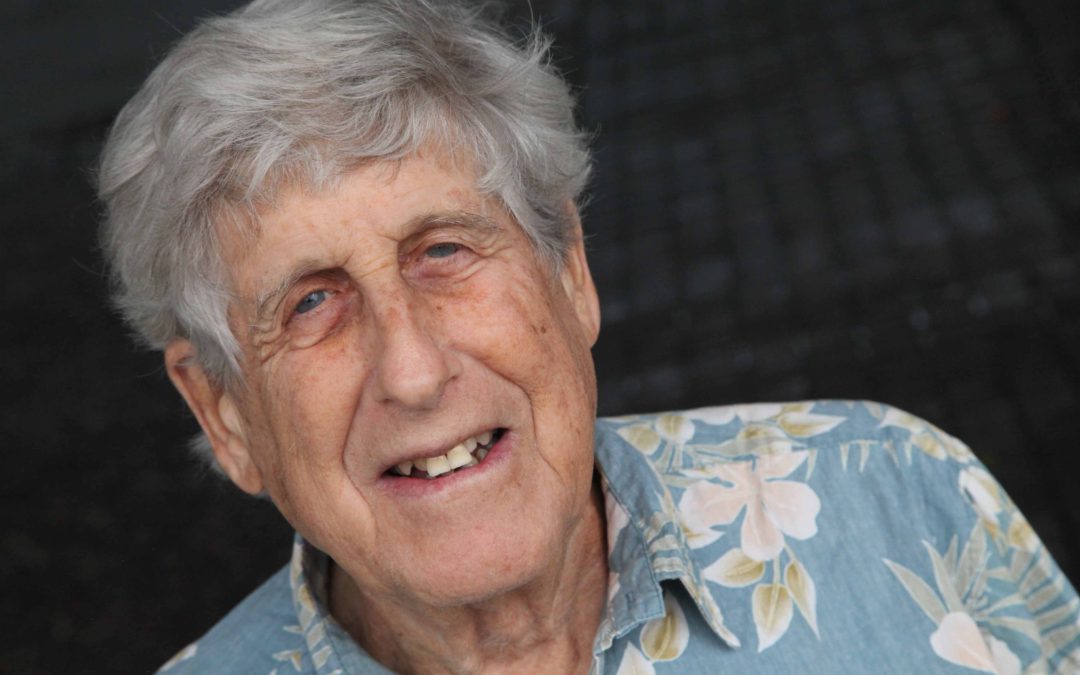
December’s second meeting of the month hosted a newbie to Speaking Freely but not to our AnCan Groups. Alan Babcock has been attending our prostate cancer groups for a while; he was finally able to vacate his schedule to make a Speaking Freely group. Alan recently retired from a hugely meaningful and rewarding career where he supervised Disability Services for students at Penn State – Go Nittany Lions!! Over the years, his team enabled thousands of disabled students to graduate .
In the course of the SF group conversation, we spoke about how cancer has impacted our lives – positively and negatively. When Alan mentioned he’d be keeping track of all the gifts received from his prostate cancer experience, we immediately asked for a copy – and here it is.Thanks for sharing your vulnerabilities, Alan and for allowing others to learn and benefit! (Editor: We’ve chosen to put Prostate in parenthesis, because for the large part, we think this applies to most all cancers!! )
Gifts of (Prostate) Cancer
1. I experienced a flood of love and good wishes from family, friends, and colleagues.
2. I returned to therapy, and I deepened my self-understanding.
3. I had the opportunity to confront my mortality, which taught me to think about decisions I make day-to-day.
4. I saw my wife do battle with the medical establishment on my behalf and win.
5. My love for my wife deepened as we confronted a life crisis.
6. I watch myself travel from despair to acceptance. Once again, demonstrating my resilience to myself.
7. I was given the opportunity to learn how to love my wife in new ways.
8. For about the hundreth time, I saw my wife was a tower of strength, and I learned once again that she would always be there for me.
9. I felt my wife’s unconditional love as she held me while I cried for all of my losses.
10. I experienced what it was like to have somebody pray for me.
11. I took control of my well-being by firing my first urologist and finding better care elsewhere, which was empowering.
12. I talked to other men who had prostatectomies about highly personal subjects.
13. I started to learn how to engage in Mindfulness rather than just talking about it.
14. I experienced a high school friend showing how much he cared by not only investigating where I received treatment, but also the physician who was going to perform the prostatectomy.
15. My brother-in-law showed how much he cared by arranging a consultation with a physician at the Dana-Farber Cancer Center.
16. A professor, who I did not know well, gave me her telephone number, and told me to call any time day or night.
17. I learned what was helpful and what was unhelpful when someone was facing a life crisis.
18. I joined a support group, in which I learn much about prostate cancer and in which I receive support.
19. I am learning to accept my limitations.
20. I have helped other men, which has been rewarding
(Editor’s note: This is a ‘master’ list of books related to death, dying, and grief. We hope you will find this to be a helpful resource in your journey, no matter what it is. If you would like to share a book that has helped you, please email alexa at rickd13.sg-host.com. Amazon links here for your convenience and ease of purchasing the book. Remember, you can help AnCan with absolutely no cost to you by purchasing through AmazonSmile. Read how to here. Special thanks to Dr. John Antonucci.)
“We face fears of death and dying, and at times turn to authors who have thought deeply and written about the topic. I offer here a short bibliography on the topic. Ideally it would be an organic list, onto which readers could add suggestions or comments.” – Dr. John Antonucci
On June 29th we hosted a webinar that we know you’ll love to share! Titled “Genetic and Genomic Testing The How’s, Why’s and Where’s“, you’ll get a crash course on everything genetic and genomic testing related.
AnCan is proud to announce that we recently joined the Modern Medicaid Alliance, a partnership
between Americans who value Medicaid and leading advocacy organizations. We look forward to
working with the Alliance to educate policymakers and the public about the benefits and value of
Medicaid.
As part of our partnership with the Modern Medicaid Alliance, we will be highlighting the diverse
populations that depend on Medicaid for their health and financial security. Medicaid covers about
1 in 5 Americans, including millions of children, older adults, people with disabilities, and 2million
veterans. Medicaid provides an essential safety net for when Americans need it, providing high-
quality, cost-effective care to more than 73 million people nationwide.
We join the Modern Medicaid Alliance at a critical time. While policymakers debate changes to
Medicaid, the program is enjoying widespread support from Americans. In fact, recent polling
found that 86% of Americans want a strong, sustainable Medicaid program – and fewer than 20%
of Americans support cutting Medicaid funding.
AnCan is particularly interested in furthering Medicaid expansion in all States in order to
promote health equity. Indeed, providing mental health services to veterans and to all those
enduring chronic conditions is an urgent need.
Peter Kafka’s words this week allow us to plug our wonderful Stage 3 & 4 Cancer Caregivers Group …. although Peter’s words should encourage us to consider changing its title! I have seen them in compassionate action this week reaching out to a caregiver whose daughter was recently diagnosed with a difficult T3 lung cancer, and they are magnificent.
Led by former USAF Lt. Col and Women’s Health Nurse Practitoner, Susan Lahaie, our other Moderators include Pat Washburn and Barbara Dyskant, all of whom have lost partners to cancer – Susan and Barbara to prostate cancer, and Pat to breast cancer. The Group meets 1st & 3rd Tuesdays at 8.00 pm Eastern in our Barniskis Room. While all caregivers are invited to both groups, we do not discuss grief and bereavement during our 1st Tuesday meetings. Check out the Group and sign up at https://ancan.org/cancer-caregivers/
Back to Peter Kafka’s thoughts that speak volumes adn endorse the message above:
A WOMAN’S PERSPECTIVE
I recently stumbled upon a book published back in 1897, THE WOMAN IN BATTLE, by Madame Loreta Janeta Velazquez. I have not finished it at this writing, but it has already stimulated a number of thoughts relative to our individual journeys with prostate cancer.
Madame Velazquez was a young and quite ambitious woman who disguised herself as a man and fought in the United States Civil War as an officer in the army of the Confederacy. What intrigues me about her story is that it is a candid first-hand account of battles, conflict, life in the masculine military and observations of male attitudes and behavior from a female perspective. I don’t want to go into detail about her accounts other than to say that she charged right into the fray, doing battle from the start on the front line at the Battle of Bull Run.
I bring this story up as I said because I find it relevant to my own “battle”, and perhaps yours as well, with prostate cancer. Many of us on this journey have female partners who are in their own way affected by the nature of our own infliction with prostate cancer needing some form of treatment and intervention. But we rarely, if at all in our meetings hear of this experience from the female perspective. I know that we (AnCan) and other support organizations facilitate gatherings for caregivers that give partners some outlet of expression. But for myself and many of you most of our female partners would not categorize themselves at “care givers”. They are our partners who have been thrown into the fray by no choice of their own and have tried to navigate their way through the obstacles that our disease has presented.
Recently at one of our meetings a participant asked if I knew of a woman that could speak to his wife about what to expect and experience relative to a course of ADT drugs which he was about to embark upon. This request stopped me in my tracks because I had never had such a request before. It took me a while but I was able to find a woman who was of a similar age and experience who was willing to dialogue with this man’s wife. It is never hard to find another man with experience to speak with regarding any number of prostate cancer treatment protocols. I have often relied on other “brothers” as many of you no doubt have as well. But for those of us who have female partners, they are sometimes left adrift to fend for themselves, only hearing our own complaints and miseries and sometimes the opinions of our treating physicians.
But it is important to remind ourselves that if we are blessed with a woman in our life, that they too are going through changes and challenges as a result of our prostate cancer diagnosis. Their experience and perspective are just as valid and important as our own. This is not just a MALE disease because it can affect many of the ways that we relate to female partners, physically, emotionally and mentally. It is not often that female partners join in on our calls, but they are never excluded from most of our discussions and their perspective is very much valued.

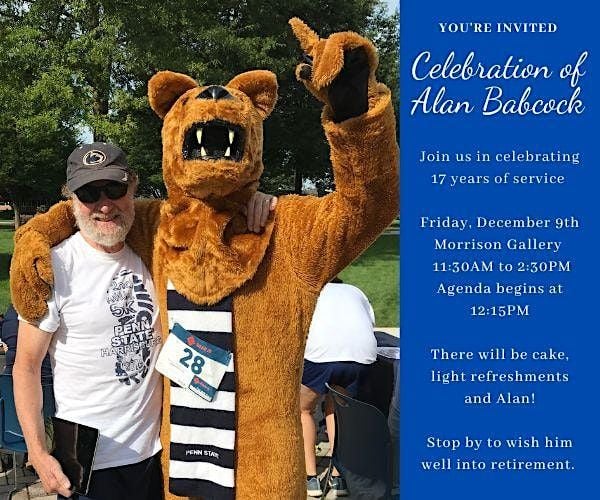
 December’s second meeting of the month hosted a newbie to Speaking Freely but not to our AnCan Groups. Alan Babcock has been attending our prostate cancer groups for a while; he was finally able to vacate his schedule to make a Speaking Freely group. Alan recently retired from a hugely meaningful and rewarding career where he supervised Disability Services for students at Penn State – Go Nittany Lions!! Over the years, his team enabled thousands of disabled students to graduate .