“Many years ago, when I was facing similar realities, a very wise and understanding voice in cancer sat me down and said, “Hope shifts in cancer.” In the beginning, we are optimistic that our loved one will respond to treatment, and our HOPE is high….as some treatments work and then they don’t, our HOPE shifts to understanding what the outcome might be….and then as the cancer moves to overcome any possible response, HOPE shifts again..this time to comfort and peace for our loved one.”
–Laurie Singer (Care Partner & Pancreatic Cancer Support Group Moderator)
Has eating become a challenge due to fatigue or a lack of interest in food? Have you noticed a significant change in your or your loved one’s appearance since starting treatment or diagnosis?
It’s a common misconception that weight loss during cancer treatment is solely due to treatment side effects. While this can certainly be a factor, a more serious condition known as cachexia (kuh·kek·see·uh) can significantly impact a patient’s health.
What is Cachexia and Who is at Risk?
Cachexia, often referred to as cancer cachexia or wasting syndrome, is a complex condition characterized by severe weight loss, muscle wasting, and loss of appetite. It’s not a direct side effect of cancer treatment but rather a consequence of the cancer itself. While it’s commonly associated with cancer, it’s important to note that cachexia can affect individuals with various chronic illnesses, including: Multiple Sclerosis, Sarcoidosis, heart failure, chronic kidney disease, COPD, and more. Certain types of cancer are more likely to lead to cachexia than others. These include: Pancreatic, Lung, Head and Neck, Colorectal, Ovarian, and Liver.
Signs and Symptoms of Cachexia: What Should You Look For?
Recognizing the signs of cachexia is crucial for early intervention and effective management. Here are some key symptoms to watch for:
Unexplained weight loss: A significant and unintentional decrease in weight.
Muscle loss: A noticeable loss of muscle mass, often leading to weakness and fatigue.
Decreased appetite: A reduced desire to eat, even when hungry.
Fatigue: Persistent tiredness and a lack of energy.
Metabolic changes: Alterations in metabolism, including changes in appetite, weight, and energy levels.
Changes in Routine: Unable to do the activities you once could.
If you or a loved one is experiencing these symptoms, it’s important to let your care team know your concerns as soon as possible.
Managing Cachexia
While there’s no one-size-fits-all solution, a multidisciplinary approach can help manage the condition. This may involve:
Dietary interventions: A registered dietitian can provide personalized meal plans to maximize nutrient intake.
Medical treatments: In some cases, medications may be prescribed to stimulate appetite or reduce inflammation.
Supportive care: This includes strategies to manage pain, fatigue, and other symptoms.
Psychological support: Counseling can help address emotional challenges associated with cachexia.
This may mean adding more people to your careteam to support you, such as a dietician (as shown above), physical or occupational therapist, endocrinologist, or palliative care (editors note: we hope you already have a palliative care doctor, AnCan loves them and they can offer you so much support during your treatment!)
Coping with the Emotional Impact
Cachexia can take a significant toll on both physical and emotional well-being for the patient, care-partner, and their families. It’s important to seek support to manage the emotional side effects of the condition. Consider:
Counseling: Individual, couples, or family therapy can provide guidance and coping strategies.
You can also ask your social worker (or for a social worker if you do not have one) for additional resources.
Want to Learn More?
We highly recommend this webpage and fact sheet from our friends at Cancer Support Community / Gilda’s Club. While it is cancer centric, all of the information will be of helpful no matter what your diagnosis is.
By understanding the complexities of cachexia and seeking appropriate support, individuals can significantly improve their quality of life. Effective management of cachexia can help alleviate debilitating symptoms, enhance overall well-being, and improve the ability to participate in daily activities.
Special thanks to CSC for their assistance and incredible resources with this blog post.
AnCan and The Marsh (well renown, long-established theater company with a large following in the Bay Area and venues in San Francisco and Oakland) collaborateevery 4th Wednesday of the month for Solo Arts Heal!
We’re back in action this 2024 with a fabulous guest, Ursa Miles!
Ursa is a performer and author from the Ozarks currently based out of Chicago. Her work has appeared on stage at the International Storytelling Center (through Jonesborough Storytellers Guild), The Mountain Makins Festival, Big Muddy New Play Festival, and This Much is True. Her book Passive Aggressive Fables for Adults is available wherever books are sold. Ursa is also a survivor of proxy supraventricular tachycardia who lives with neurocardiogenic syncope, hypoglycemia, and hypermobility disorder. She loves cheesecake.
Ursa tells stories about maintaining relationships with her passions for the outdoors and the arts while navigating her life as a heart and neurological patient.
Wild animals such as deer, bears, and raccoons make appearances. Oh my! You’ll be captivated the entire show.
AnCan and The Marsh (well renown, long-established theater company with a large following in the Bay Area and venues in San Francisco and Oakland) collaborateevery 4th Wednesday of the month for Solo Arts Heal!
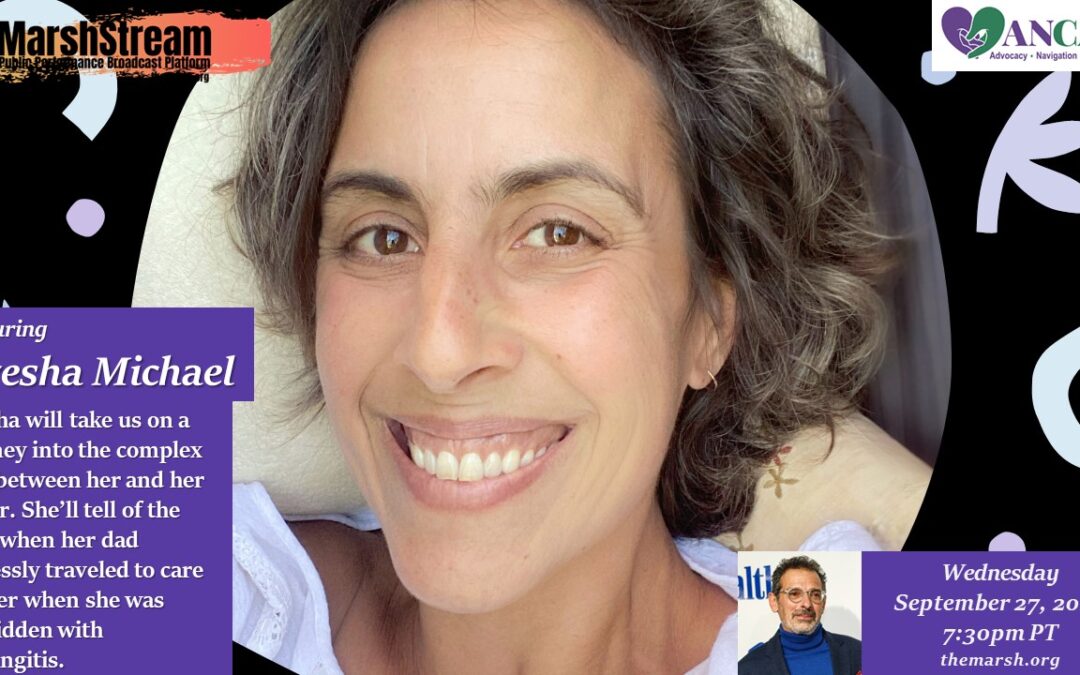
Avesha recently returned to her hometown of Chicago, where she has developed a passion for storytelling and the community surrounding it. During her twenty-two years in Los Angeles, she quickly ditched a legal career to put her whole heart and soul into arts and crafts. She spent ten years as a professional photographer before taking a risk to turn her childhood passion into a new career: ceramics. She founded a pottery studio and humbly and gratefully ran it full-time for eight years, crafting housewares and, more recently, whimsical gnomes. Now, she is counting the days until she can escape the city and start a small homestead, complete with chickens and goats.
She is deeply committed to speaking truth to story and bringing awareness to mental health and trauma-informed, shared human experiences. To her, connection is everything, to be human is to have trauma, and to heal, we first need to learn how to feel. She holds an MA in Spiritual Psychology, is trained in many healing arts, and was certified recently as a Breathwork Facilitator and Reiki Master.
Avesha will take us on a journey into the complex love between her and her father. She’ll tell of the time when her dad selflessly traveled to care for her when she was bedridden with meningitis. Years later, she found out that he had unexpectedly died alone, estranged from his relationships. She’ll tell the story of caring for the aftereffects of his life and continuing the journey of a relationship that still grows and heals through forgiveness, writing, music, and the love of nature he instilled in her.
AnCan and The Marsh (well renown, long-established theater company with a large following in the Bay Area and venues in San Francisco and Oakland) collaborateevery 4th Wednesday of the month for Solo Arts Heal!
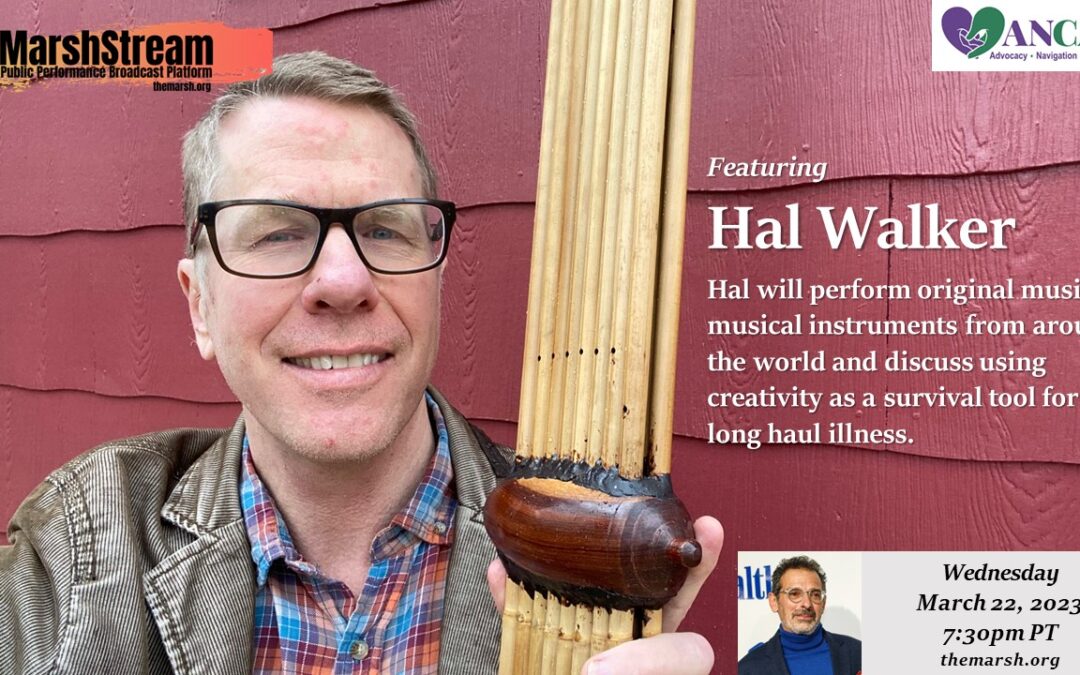
March’s guest was fantastic, meet Hal Walker!
Hal is a writer, musician and social media sensation from Kent, Ohio (2.3 million TikTok followers). Now mostly housebound and bed-based, over the last two years he has experienced the onset of moderately severe ME/CFS (Myalgic encephalomyelitis/chronic fatigue syndrome). Hal also produces the weekly Substack publication, Living in a Body. You can learn more about him here.
Hal performed original music on musical instruments from around the world, and discussed using creativity as a survival tool for long haul illness.