Keeping cool in the heat of Summer… and tackling hot flashes year round
We hear it time and time again – keeping cool is not easy.
Many people across our communities complain about how much the heat impacts their ability to function at all – whether it’s from outside heat or internal flashes.
I can talk about this one pretty confidently myself, as I’ve been living with MS for 9 years now (wow!). It’s a known heat and cold -intolerant disease that causes temporary symptom flares known as Uhthoff’s Phenomenon. But I’m not the only one. Heat impacts many of us frequently – especially MS’rs and men on hormone therapy.
It’s a consistent and persistent problem for so many of us, so I’d like to dedicate this blog post to the hot, sweaty, brain-fogged, but brilliant AnCan community.
Below you’ll find some recommendations for wearable cooling products and other resources that we hope will ease your summer; not to mention your Quality of Life all year round.
The first part is a list of specific products that are tried and tested by either myself or someone in one of our community groups – with many of them coming from one of our lead moderators, Kim Stroeh. Thank you, Kim! Other suggestions come from AnCan Gents wrestling with hot flashes in the prostate cancer world, like Barry Blomquist and Bob Alvord… thank you!
Second is a list of products that we’ve heard about, but so far we don’t know of anyone who’s tried them; also products that maybe we have tried and tested, but don’t really have a specific link for.
Third is small list of tips and resources. I’m going to keep this part relatively small because it will probably need a completely separate blog post. Since Kim and I both have a chronic illness (MS) that makes us much more susceptible to the heat, a lot of our resources come from organizations that deal with it specifically. I’ve included those orgs that may be helpful no matter what our community may be living with.
Pro Tip:
Did you know that some insurance companies may cover the cost of a cooling product? That’s because it’s considered a DME (durable medical equipment). It may be tedious, but call them up and ask.
We don’t get any financial benefit from these products; these are just some things that our community members have recommended because they actually work for them. Hopefully they work for you too!
I’ll be including a lot of links from Amazon because it’s simply easier to see a wider range of products and brands in one spot. I know Amazon may not be everyone’s favorite shopping platform, so feel free to use these ideas as a springboard to your preferred shopping platform or store.
Have a product to add or a link to a product listed below? Email me at Hannah@ancan.org
1. Tried and True
Specific products that are tried and tested by someone in one of our community groups
I just got one at the start of the summer and I absolutely love it!! I wonder why I didn’t get one sooner. Keeps me cool under the blanket when I move around. When I’m still, it keeps me warm. – Hannah
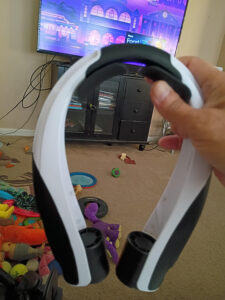
Recommended by Bob Alvord (High Risk Prostate Cancer). See section 3 below for his favorite way to use this rechargeable neck fan when combined with a wet cooling towel!
“If indoors with extended cooling packs will stay cool for 2-3 hours or longer. Outside, it depends on how hot it is. I think the melting temperature is 72 degrees vs 32 degrees of water. Can become solid again at room temperature if the ambient temperature is cool enough.”
“Don’t waste your money on slim packs, buy the extended packs and by an extra set so you can switch out in between (you can buy in bundle and save money). The one reason I like this cooling vest is that its cooling packs are only on your back so it weighs around 2 lb versus a prior cooling vest that had them both on the front and the back and weighed 8 lb that was very bulky and made me feel like a bulky football player. For me, heavy weight can make my fatigue worse/drain me faster and that is one of the reasons I did not like the heavier one. I wear this when I need it (now if I am outside for any length of time in summer or attempting to do yard work) and have to wear it when I train with my personal trainer twice weekly at the gym. It is not really noticeable visually wearing under a t-shirt unless it is body hugging, it has a relatively low profile.” – Kim
“It looks like they changed the design since I bought it so you are using the smaller individual packs versus 4 larger packs. Remember, smaller compartments will melt faster and not last as long. Cooling vests are nice because you stay dry. Store in freezer/fridge so always ready to go.” -Kim
2. Products to Try
A list of products that we’ve heard about, but so far we don’t know of anyone who’s tried them; also products that maybe we have tried and tested, but don’t really have a specific link for.
Please use the search method or store of your choice. You can copy/paste from here to get more targeted results
Folding Hand Fan – the manual kind
“Carrying a portable foldable hand fan can go a long way. Incredibly grateful I bought mine into Target field. Lightweight, cheap, takes up little space and easy to transport.” – Kim
Portable Rechargeable Handheld Fan
I never use it because – it needs to be charged, bulkier and heavier than the foldable fan. – Kim
Portable Rechargeable Neck Fan
Click the link here for Bob Alvord’s top choice. Then, scroll down to section 3 to see his genius way of using it.
“I am not a fan of the neck fans because they tend to be loud (so harder to hear) and don’t give enough breeze for me to be very effective. May be effective for others that are not as extreme as me.” – Kim
I have one that I use on occasion. It’s a cheap one. I like it well enough to bring with me on the rare summer hike, but not enough to recommend a specific one. It’s a little bulky and makes my neck sweaty where it hangs on my neck. Can also be a little bit loud, but I don’t usually mind. – Hannah
Cooling wrist wraps
Cooling Bra inserts
Cooling Hats
With a built-in fan
Water activated
Or just the gel inserts
Cooling headband/ wraps – can also search for cooling migraine relief
Cooling Scarves / towels
Cooling Eye Masks – Great for migraines too
Cooling Vests – see above for specific products
Cooling Pad for Car
Gel seat pads
Electric car seat covers
Cooling Pad for Seat– This set of search terms brings up a lot of the same links as above
Cooling pillowcases – side note- this will be my next purchase after the success of the cooling blanket I recently purchased! – Hannah
Cooling pillows
Cooling mattress
Cooling mattress topper
Cooling blanket
Bamboo sheets and bamboo pajamas
“If have issues being overheated while sleeping, I highly recommend getting both bamboo sheets and pajamas. They not only keep you cooler but will help wick away the moisture so you don’t feel drenched when you wake up.” – Kim
REON POCKET PRO Plus
Not yet on the market, but Barry Blomquist (Prostate Cancer community) mentioned it. Sensors actively adjust to temperature shifts maintaining your personalized comfort, while dual thermo-modules deliver efficient on-the-go cooling and warming.
You’ll find tips + even more links to cooling products they recommend (including cooling bra inserts, eco- friendly products, cooling hats & wrist wraps, & others). Some even come with discount codes!
Advice for sleeping at night. Lots of mention of products that I’ve listed above
Tips for Sleep
“The ceiling fan is your friend. I have also learned I need to turn the air down to 70 degrees from 72 degrees when I sleep because it is still too hot where my body touches the mattress.” – Kim
I use a slim floor fan, but have it set up on top of a nightstand at the foot of my bed. I also turn the AC down to 71F at night. I also make it a habit to use lotion on my feet and legs right before I get into bed. It has a soothing, cooling effect that keeps the heat away for a while – especially with the fan blowing directly on me. – Hannah
Tips & Habits to Sprinkle Throughout Your Day
“Drinking heavily iced water/beverages or frozen food can go a long ways. Most metal water bottles the ice will last most of the day.” – Kim
“I use floor fans when I am hanging outside on the highest setting. Helps keep bugs away too. Need outlet/extension cord available to access electricity. Can be kinda loud.” – Kim
Kim’s Ice Crown
“A new thing I tried 3 weeks ago because using the cooling vest, heavy iced drinking water, and a spray bottle/fan that I keep in the fridge and add ice cubes before I left the house was not enough to keep my cool enough while training for 30min (I told you it was extreme!) I take bandana, open it up, line up ice cubes to two opposite diagonal corners (10-12 ice cubes for me from my ice maker), roll it up and tie around my head or neck. Will last about 30 -45 min wearing indoors. You will be wet from it and dripping with water and your t-shirt will get wet but that is okay for me during the summer. Store in ziplock bag when traveling with it and make ahead of time and store in freezer. I have it my thermapparel cooler when transporting so it doesn’t melt until I put it on. I call it my ice crown. Leave some space at the ends so you can tie it around your head or neck. Also rewetting bandana with icy water if hiking, etc helps after ice cubes melt. Cheap if you have ice maker but you will get wet from the chest up and doesn’t last as long as a cooling vest.”
Bob Alvord’s (High-Risk Prostate Cancer community) neck fan- towel combo
Bob Alvord with his cooling towel and rechargeable neck fan combo
“… I use a well hydrated cooling towel, large one and a wearable neck fan to alleviate hot flashes. You wear the fan around your neck and then place the cooling towel over the fan. This system greatly lowers the towel temperature. My measurement of the towel with the fan is around 65 degrees, using a thermometer. Placing the towel against your corotid, with a 65 degree temperature source is enough to lower exposure to heat. ”
Have a product, tip or URL to recommend? Email me at Hannah@ancan.org
“Someone I once loved gave me a box of darkness” –Mary Oliver
I was at a 12-Step-oriented workshop about grief recently, and it made me think about Men Speaking Freely (MSF). We are vaguely aware of grief in all MSF groups, it hangs over us, and we have at times focused on some specific griefs/losses, such as vitality, or a longer life. It is commonly thought that not thinking about a loss, not talking about it is the manly thing to do. Here in MSF we get relief by sharing our common losses with each other.
The presenter of that workshop, Marcia C., had some ways to specifically talk about grief that were new to me. She gave me permission to use some of her material here. She pointed out some types of losses that I hadn’t realized. For example, the loss of who I would have been if cancer didn’t happen, the grief of estrangement, loss of work, of status, of friendship; the loss of never having had something, that of aging, of trust, or of giving up something.
She said there is “unacknowledged grief” when such losses are never fully brought to consciousness. When I looked at her long list of examples I saw many that I have. We ought to watch for unacknowledged grief.
She described “non-finite” grief, which has no end-point other than death. Ours could be in that category, since as time goes by our loss increases instead of lessens.
Marcia said, ‘’Sharing your grief is a way to receive validation and compassionate witnessing. It can help you begin a path to healing and/or finding a way to live with grief.
Consider the questions below:
1. Are there griefs you haven’t realized you have or have been afraid to face?
2. Are there griefs about which you’d like to share?
3. Do you have grief practices that might be helpful to others?
4. Make a list of griefs you’ve experienced.
5. Choose a tool from the list that might help you process your grief.”
That list of “tools” was long; it included things like: write a letter or poem describing our loss…Create a ritual of letting go…Share with others who have had similar losses…Visit a place that is meaningful…Make or buy a talisman that helps you feel protected…Dance, run, yell to get your feelings out of your body…Plant something in remembrance or as a new beginning…Start a new tradition…Do an intentional funeral… These are ways to bring acknowledged, unacknowledged, and non-finite grief out for a conscious conversation. Moving from covert to overt, with the goal of making a relationship with the loss, and getting rid of the unconscious silent prolonged scream that I, for example, think I harbor.
We think of grief as emotional, but in “Dealing With the Physical Impact of Intense Grief” by Batya Swift Yasgur, the author describes the variety of physical reactions to grief. Ranging from elevated blood pressure to takotsubo cardiomyopathy — sometimes called “broken heart syndrome” — which is a “stress response that balloons the heart.” We often wonder about the reaction on our immune system, and its implications to our overall survival. In fact, probably nearly all our systems react to grief in some way.
There is a fairly new grief-related diagnosis in the Diagnostic and Statistical Manual and the International Classification of Diseases, describing a “persistent and pervasive grief response” that goes on longer than a year., and is now called Prolonged Grief Disorder. In order to be diagnosed with Prolonged Grief Disorder, a person must experience at least three of eight additional symptoms that include “disbelief, intense emotional pain, feeling of identity confusion, avoidance of reminders of the loss, feelings of numbness, intense loneliness, meaninglessness, or difficulty engaging in ongoing life” according to Columbia University’s Center for Prolonged Grief. For an adult to meet the criteria for a PGD diagnosis, the death of a loved one must have occurred at least one year ago, and the symptoms must be present most days since the loss and nearly every day for at least the last month.
Our situation is different from losing a loved one (although it includes that) and waiting for the grief to go away. Instead of a major loss which goes farther and farther into the past, our major loss is in the future. We have sort of a reverse Prolonged Grief Disorder. For instance, I expect my losses to get worse and worse until death.
Helpful Tips to be Your Own Best Medical Researcher
AnCan asked Mike Wyn, a valued AnCan Frequent Flyer and intrepid researcher, to provide a little navigation to those who are new to research… as well as useful tips for some old hands like myself. I’ve already gathered some research nuggets from Mike’s wisdom… thank you, Mr. W.
Here are a few tips ensure the medical information you are researching is reliable and accurate
Book Research
Check the publication date: authors may need at least a year to write a book, and the average time between a book’s acceptance and its publication is typically between 9 to 12 months. Hence, the data may already be outdated when it hits the shelves
Professional Presentations
Check the credentials, disclaimers, and disclosures of the presenters. Who is the author? What is the sponsoring organization providing the information? Preferred sources are from reputable institutions, such as universities, hospitals, or government health agencies.
Google Web Searches
Use command “site:” to limit you search to top-level domains like .gov, ,org and ,edu. For example, type: latest NCCN guidelines for prostate active surveillance site: .gov OR site: .org OR site: .edu
Be cautious with .com sites unless they are from recognized and credible entities. Medical databases such as PubMed, Cochrane Library, and Google Scholar are good sources for cross-referencing scientific research.
Articles, Online Posts
Check articles, online posts, videos etc. for their sources, including scientific studies, medical journals, or clinical trials. Information from peer-reviewed journals is typically more reliable than content from non-peer-reviewed sources. Poor reviewed means that other people similarly qualified to the author have reviewed teh article adn provided comments.
Anecdotal Evidence
Anecdotal evidence is information that has been observed by the person reporting but not verified. Be skeptical of anecdotal evidence such as personal stories. It is not scientifically reliable. Focus on information supported by scientific evidence and clinical studies. The quality levels of evidence from highest to lowest for medical data are:
Systematic reviews: collect and evaluate all available data/evidence within the researchers’ criteria. An example is the “Cochrane Database of Systematic Reviews”. Meta studies are a systematic review.
Randomized controlled trials: participants are randomly assigned to experimental and control arms. The double-blind trial is the gold-standard of medical research where neither the participants nor the researchers know the placebo or medication/treatment is given. This is to prevent bias and to ensure the validity and reliability of the study.
Cohort observational study: participants with common traits or exposure to the proposed medications or treatments are followed over a long period of time.
Case study or report: a detailed report of result after treatment of an individual. This is formalized and reviewed anecdotal evidence.
Medical Trial Reports
The phases of medical trial studies cited by published medical papers are:
Pre-clinical studies: laboratory experiments using cell cultures, animal or computer models. In vitro means tested In Vitro – literally ‘in glass’ means testing outside a living organism, in a test tube or petri dish, In Vivo – literally in life -means testing in a living organism, often mice. Then studies move on to humans…
Phase I trials: assess safety, dosage and side effects of the proposed medications or treatment.
Phase II trials: expand P 1 to evaluate efficacy of the proposed medications or treatment – how well it works..
Phase III trials: confirm efficacy, safety, dosage and to evaluate side effects of the proposed medications or treatment in much larger samples. This is often where randomized blind and double blind design is used. Blind means the patient does not know what they are getting; double blind means neither the patient nor the clinician know what is being dosed.
Phase IV trials: monitor long term effectiveness and safety of the medication or treatment.
Statistical Terms
Some terms regarding statistical data cited in medical journals are explained as follows:
N = the number of participants: be wary of studies with a very low N.
HR = hazard ratio: HR=1 – there is no change in the proposed medication/treatment compared to control baseline. HR<1 – there is a reduction of risks with the proposed medication/treatment. HR>1 – there is an increase risk with the proposed medication/treatment.
CI = Confidence Interval: A trial shows that a particular drug has a 20% effect within a certain time frame with 95% CI. This shows that the study, if repeated many times, it will be 95% confident that the 20% reduction will be consistently observed.
P-value = Probability Value: This measures how strong the evidence is that the hypothesis, or effect being tested, is correct, rather than the result being random, or incorrect (null hypothesis). We seek a P-value that is <=0.05 meaning that there is a 95% or better likelihood the result is attributable to what is being tested..
You already know that at AnCan we are all peers, did you also know how much we love sharing resources with you? Well I have a resource that I would love to share! Camp Mak-A-Dream.
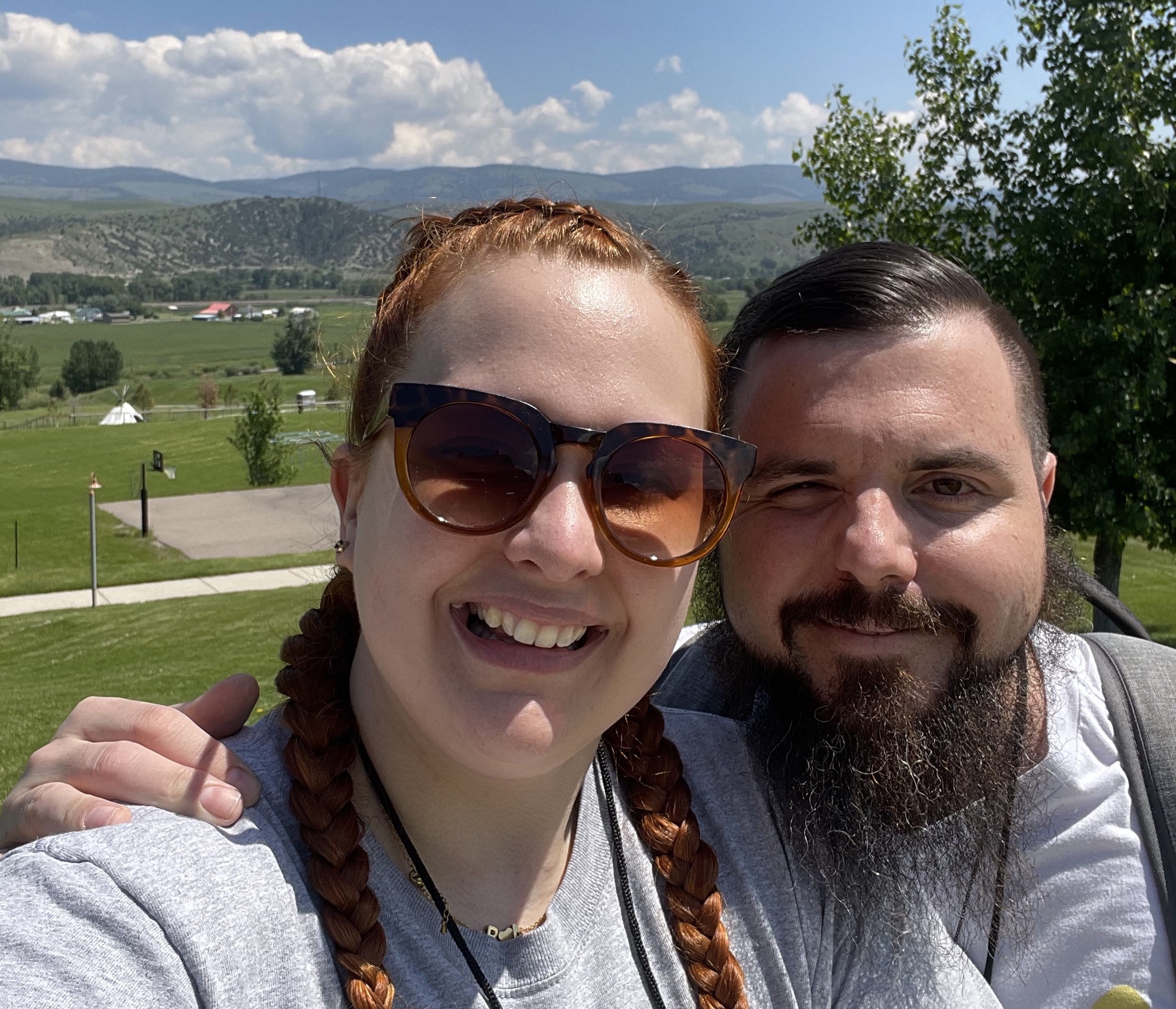
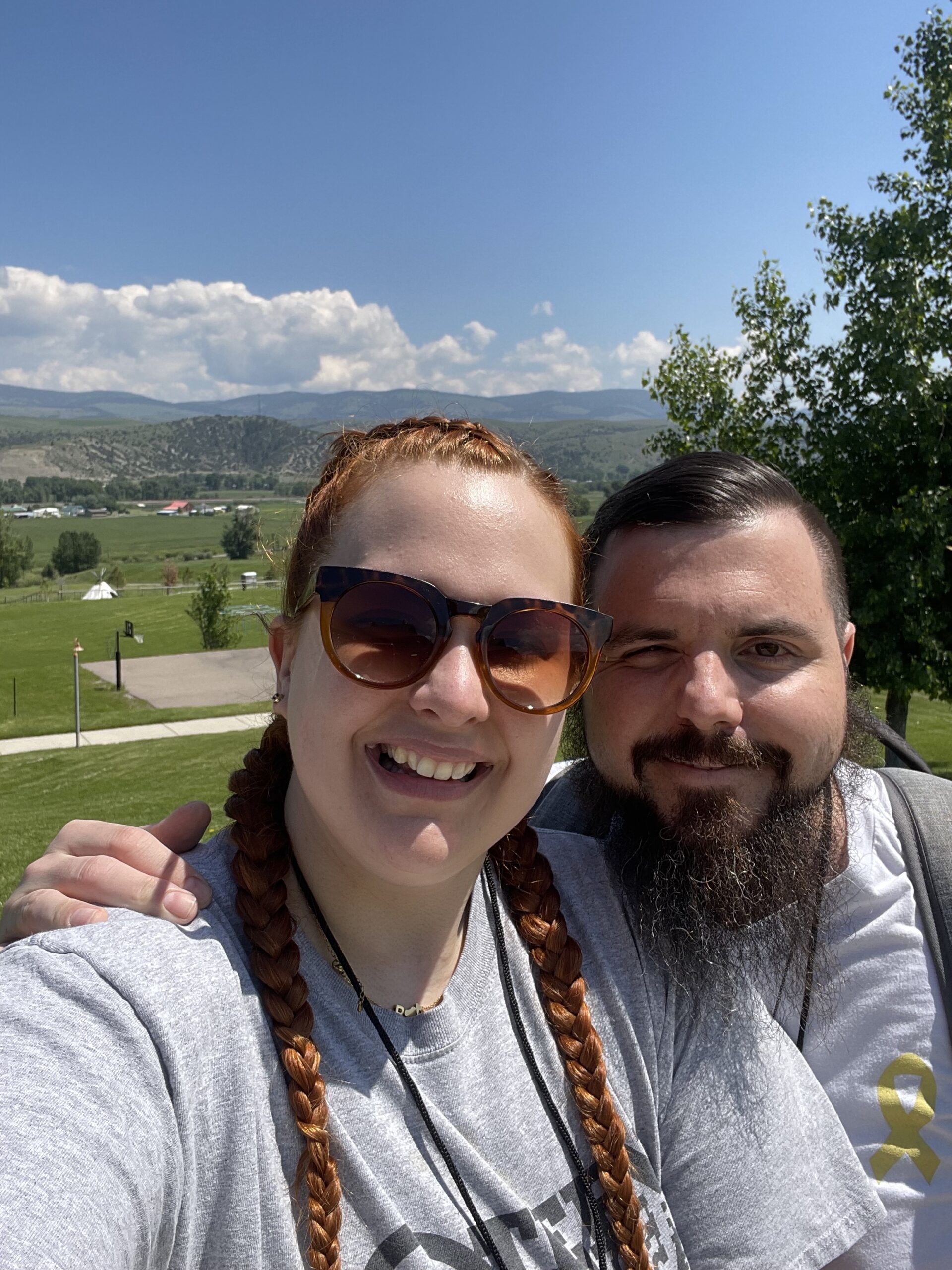
The view at CMAD
I had the absolute privilege of attending last year’s YAC (Young Adult Conference) for campers aged 18-35 with my fiancé Brian, and I’ve already applied for this year’s YAC since applications opened January 3rd. I enjoyed it so much that I set a reminder on my phone so I could apply as soon as possible!
I had heard about CMAD from lots of people in the community. From an AYA social worker, friends, and it was even mentioned on our webinar with Nancy Novack from Nancy’s List – Nancy’s Top Ten An Evening with Nancy Novack. To be honest, I was concerned it was overhyped. No place could be that incredible, but it is.
Camp Mak-A-Dream is in Gold Creek, Montana which was unbelievably gorgeous. I had to pinch myself every time I went outside. The ride from the airport (Missoula/MSO) to the camp was mile after mile of scenic beauty. The air is fresh, the grass is green and lush. The airport is used to campers coming in, and even TSA is super nice!
So what was it like?
Staff were waiting at the airport to greet me with snacks and drinks. I met my fellow campers and we chatted. T Staff take care of your luggage and guide you to the bus. No worries about transportation here, they have it covered to and from airport. As soon as I exited the CMAD bus when we arrived, people where cheering for me and rushing to give high fives and pats on the back for a warm welcome. I felt like a rock star.
Brian with Larry, and me with Roger!
We had to get serious stuff out of the way before the fun could begin, as CMAD is medically supervised, I had to check in with the medical team to go over my medications, and they asked questions to make sure they can take good care of me. They also do this so you know where to get medical help if you need it, and I did, twice. Someone is always on call, and you’ll receive the same care as the oncologists office. One of the medical team members even gave me a check up when I had an issue at breakfast so I could get on with my activities for the day, instead of being at the clinic.
That was great, because as a cancer patient, I’ve been in the clinic ENOUGH! Even though I’m an adult, it gave my mom so much peace of mind to know that I was fully taken care of.
They had fun activities planned to help me get to know other campers, and then we had a full buffet style dinner. After dinner we split up to do activities of our choice, I stayed up and played card games with my fellow campers and laughed so hard I cried, and my stomach hurt. Then it was time for bed.
Every single day was full of activities, however they also schedule rest time daily. You never have to do an activity you don’t want to, and if you don’t feel well, you can always rest.
Here are some activities I did:
Photo Credit – CMAD
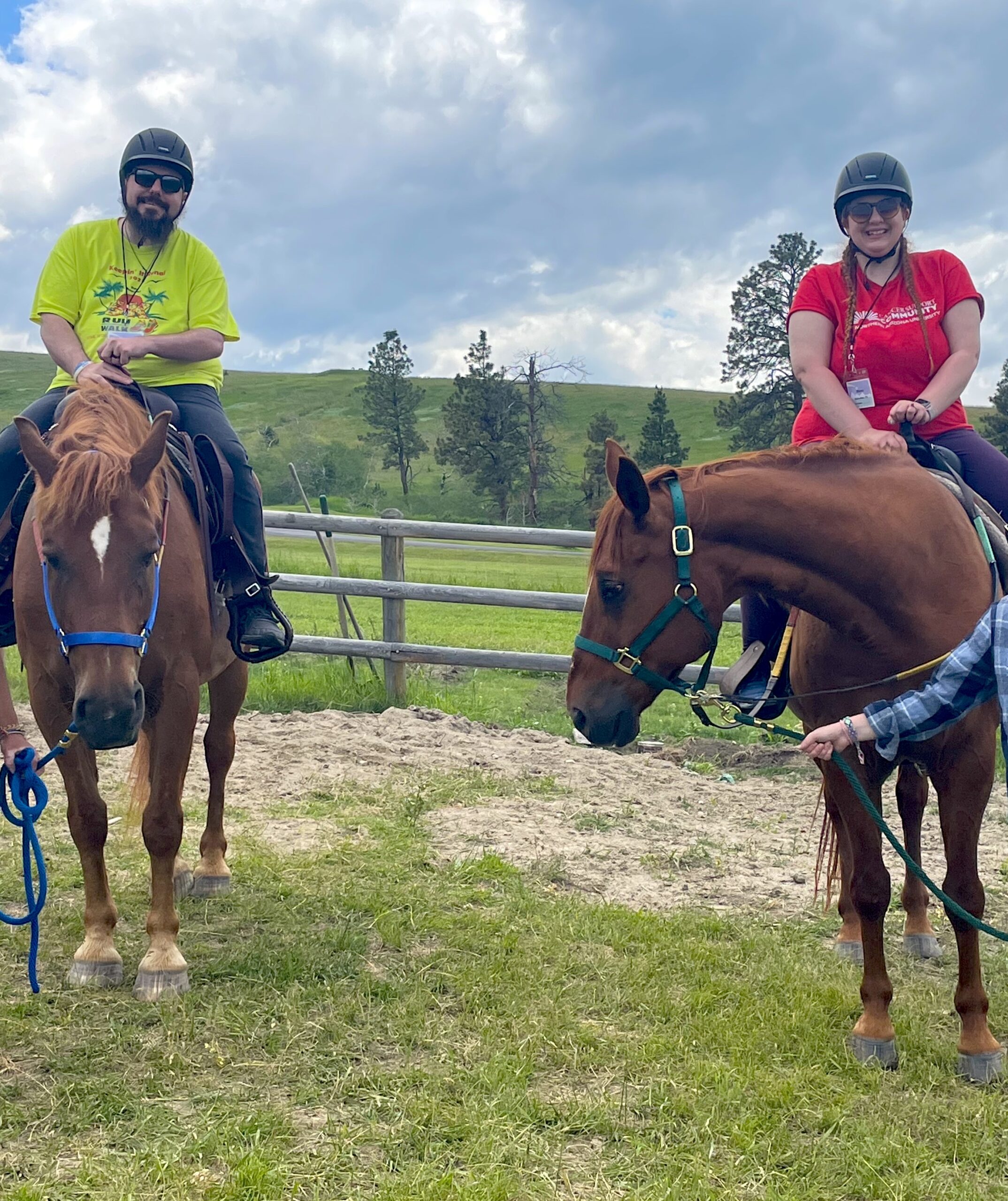
Archery, cake decorating, geocaching, scavenger hunt, high ropes painting, coloring, tie dying, cornhole, swimming, air rifle shooting (taught and supervised by Montana Parks and Wildlife), zip lining, outdoor camping, campfires, horseback riding, yoga, meditation, journaling, advocacy class (because you can always learn more!), and so much more, this is a short list!
They have a bunch of other stuff you can do like mini golf, outdoor sports, art, it is incredible.
Everyday I had a chance to connect with my peers regarding our cancer experiences, and at AnCan, you already know how much we support this. I laughed, I cried, and I healed. There are lots of rituals and experiences that they have, that I will not share here, because they were so meaningful to me, and the added benefit of surprise complimented that.
Because I didn’t have to worry about anything (my medications, health, food, dishes, no cell service so no calls, current events, etc) it gave me time to truly focus on myself. It was much needed time designated time for me. I conquered fears, I learned new skills, and I left a much better Alexa.
Would I recommend camp to AnCaners?
YES!
Camp is FREE!! (only have to pay for travel, travel scholarships are available)
I hope you will check out what camps they offer and apply for yourself (or you and your carepartner at their caregiver camp). I hope to see and hear about your camp experiences in the future.
Questions about camp experience I didn’t answer here? Email me at alexa (@) rickd13.sg-host.com.
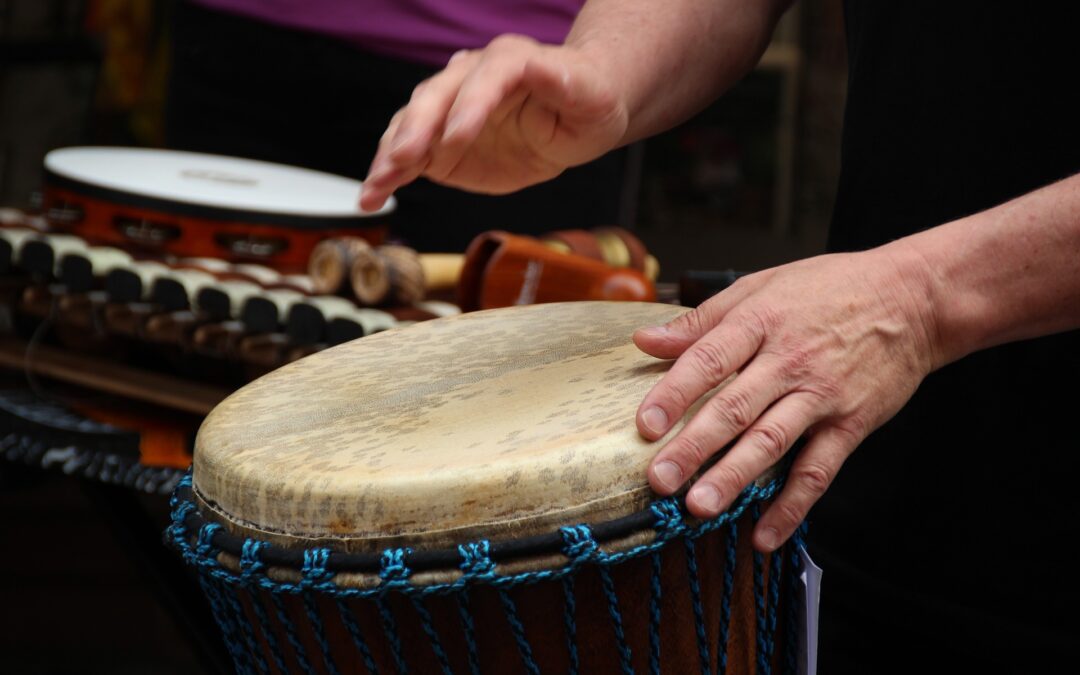
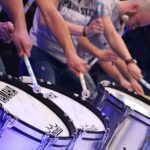
Bang your drum… it could make you smarter and healthier!
I don’t want to work I want to bang on the drum all day I don’t want to play I just want to bang on the drum all day
–Todd Rundgren
Twice in the last several months, the topic of drumming came up in our AnCan Men Speaking Freely group and it generated some excitement both times. So this month’s invite will be on that topic.In my former practice whenever I have given a non-verbal treatment there is a big relief that no talking is involved. In bypassing the verbal and left-brain systems we gain access to a typically unused part of ourselves. I wonder if we can use this approach to cope with our serious illnesses and have a better life?
Our brains have a characteristic called plasticity, the ability to change. You may have heard of this regarding the little finger brain circuit of violinists; it grows as they become proficient. Drummers also have different brains than the rest of us. They have fewer, thicker nerve fibers between the two halves of the brain. They have more efficiently organized motor cortices. (Schlaffke, 2019). Because of this, drummers can do things that we can’t. They can coordinate the two sides of the brain better, and perform motor tasks with greater efficiency. They can play different rhythms with each hand and foot at the same time.
Schlaffke’s subjects had drummed many hours per week for decades. But Bruchhage’s (2020) subjects trained for only 8 weeks and showed several changes in the cerebellum plus changes in the cortex, showing not only cerebellar plasticity but also communication and coordination between the cerebellum and brain sensorimotor areas as well as areas for cognitive control.
Drumming is very complicated, which is why it’s unfair that the lead guitar and vocal guy gets all the girls (Greenfield, J. 2022).
For some reason, there is a close association between beat synchronization (integrating auditory perception with motor activity) and reading ability in children (Bonacina, 2021). Higher synchronization ability predicts better literacy skills. Maybe early intervention involving drumming can improve literacy in kids?
Cahart et.al (2022) showed that drumming can improve behavioral outcomes for autistic adolescents and elucidated some of the neurology involved. Does this mean it could help us?
Drums have been used for millennia for healing, inducing trance, and even psyching up soldiers.
We have learned that drumming is not just about waking up the right brain, but also about connecting the sides of the brain, and the cerebellum with the cortex. It can induce alpha brain waves. It can release endorphins. Even T-cells respond to drumming (Bittman). It induces present-moment experience, which we often work toward to deal with death anxiety. Interpersonal connections are made when people drum together. Despite the effort involved, it induces relaxation. I have come across papers describing drumming and music therapy for a wide variety of emotional problems and currently, there are 8000 music therapists in the US.
How about for us? We see above the possibility of reductions in anxiety, tension, pain, isolation, depression, and over-thinking the past and future. There are many studies of music therapy in ICUs, with patients on ventilators, easing hemodialysis pain, with positive results. Also, helpful with narcotic use, social integration, and depression. MSKCC uses music therapy.
With terminal cancer, there is data showing that music helps breathing, QOL, psychospiritual integration, reducing pain in chemotherapy, radiation, and helps pediatric breast and lung Ca patients (Ramirez 2018, Hilliard 2003, Burns 2015 Tuinmann 2017, Barrera 2002, Li 2011, Lin 2011). Atkinson (2020) found improvement with fatigue. I couldn’t find any studies focused only on Prostate Cancer.
Well, all this scholarly stuff is really unnecessary to anyone who ever banged a pot with a wooden spoon. Kids love it. Adults love situations where it’s OK to be wild and make noise, such as drumming circles and Pound classes. It’s just fun and feels good.
Dr. John Antonucci
Editor: Dr. John wrote this for our Men Speaking Freely Reminder on Dec 7, 2023. It’s such a perceptive, helpful and instructive piece, AnCan wanted to share it widely.
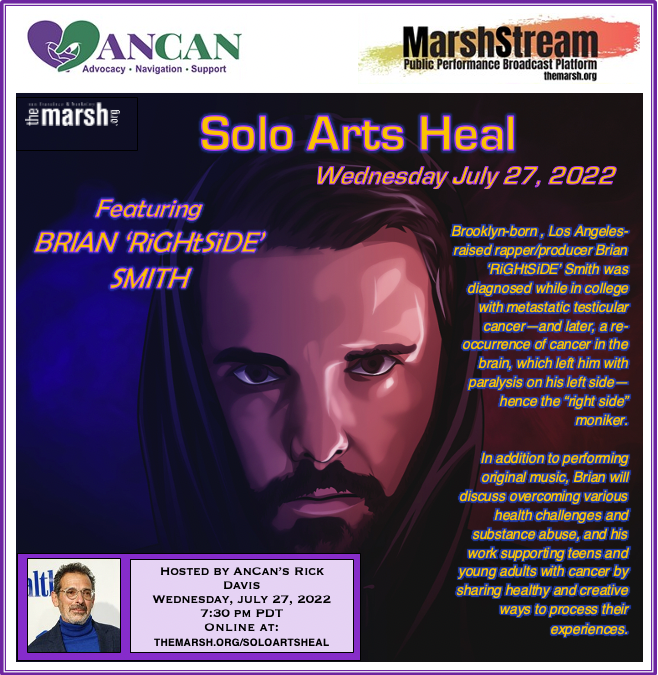
AnCan and The Marsh (well renown, long-established theater company with a large following in the Bay Area and venues in San Francisco and Oakland) collaborateevery 4th Wednesday of the month for Solo Arts Heal!
Brooklyn-born, Los Angeles-raised rapper/producer Brian RiGHtSiDE’ Smith was diagnosed while in college with metastatic testicular cancer – and later, a reoccurrence of cancer in the brain, which left him with paralysis on his left side – hence the “right side” moniker.
In addition to performing original music, Brian discussed overcoming various health challenges and substance abuse, and his work supporting teens and young adults with cancer by sharing healthy and creative ways to process their emotions.
Watch this inspiring performance here:
To SIGN UP for any of our AnCan Virtual Support group reminders, visit our Contact Us page.

 We hear it time and time again – keeping cool is not easy.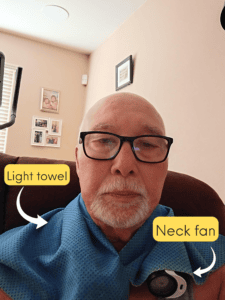

 With terminal cancer, there is data showing that music helps breathing, QOL, psychospiritual integration, reducing pain in chemotherapy, radiation, and helps pediatric breast and lung Ca patients (Ramirez 2018, Hilliard 2003, Burns 2015 Tuinmann 2017, Barrera 2002, Li 2011, Lin 2011). Atkinson (2020) found improvement with fatigue. I couldn’t find any studies focused only on Prostate Cancer.