Stay in shape with FIT Together in your own living room!
Mark and Kathy Baldridge are avid birders, and as a result, frequent visitors to “Deep Southern Arizona” from their home in University Place, Washington. You may have seen them in an AnCan Group – we’ve been supporting the Baldridges since 2021.
Recently Mark mentioned an at home exercise program in a group, so we encouraged him to tell us more so all AnCan’rs living with cancer could participate… with or without their care partner.
This October 17th, AnCan will participate in the OHSU-Fred Hutch Prostate Cancer Summit. Dr. Kerri Winters is also speaking, and Dr. E (Eleni Efstathiou), the new Chief of Genitourinary Cancer at OHSU, has already set up a time for us to meet. We’ll be writing about the Summit closer to the date. (rick davis)
Back in high school, I did multiple pushups before I went to bed. Fast-forward 50 years and I was unable to do a single pushup. Over the years, I’d fooled myself into thinking I was in ‘decent shape’ because I took long walks several times a week. The truth was that after being diagnosed with osteoporosis, 24 months of Hormone Therapy and a lack of upper body exercise, my overall strength had significantly declined.
Fortunately, I discovered an online exercise program FIT Together for cancer survivors and their partners. FIT Together is a 501(c)(3) nonprofit organization founded in 2014 under the leadership of Dr. Kerri Winters-Stone and Jessica Sitemba. Dr. Winters-Stone has a PhD in Human Performance and has been conducting research in exercise oncology for 20 years. She has run over 15 clinical trials funded by NIH and cancer non-profits. I have participated in two of Dr. Winters-Stone’s clinical trials run through Oregon Health Sciences University – OHSU.
I’ve attended FIT Together classes for a year and can attest that the instructors are excellent. They demonstrate each exercise and then give tips to ensure each participant correctly performs the exercise. The instructors individualize and tailor movements and exercises to accommodate each person’s needs—no matter what the person’s fitness level. For instance, pushups can be performed in many different ways (e.g. against a wall/desk/chair or on hands and knees/feet).
The classes are held twice per week at various times virtually. I love the convenience of performing these exercises at home and look forward to each class. All you need for the classes are dumbbells, a resistance band, stretch strap and an exercise mat. The cost for this equipment is quite reasonable—less than $75.
There are several classes to choose from: strength training, strength/cardio and an exercise class for couples. Classes are very reasonably priced— around $5 per session for a 12 week/24 session class… even less if two of you join together.
I participate in the strength training class and physically feel much better about myself. It’s been really encouraging to see that I’ve slowly gained upper body strength. While I still can’t do a pushup on my hands and toes, I can perform 12 pushups on my hands and knees—I’m on my way to performing a full pushup.
I highly recommend these classes and hope to see some of you in a class—you won’t be disappointed!
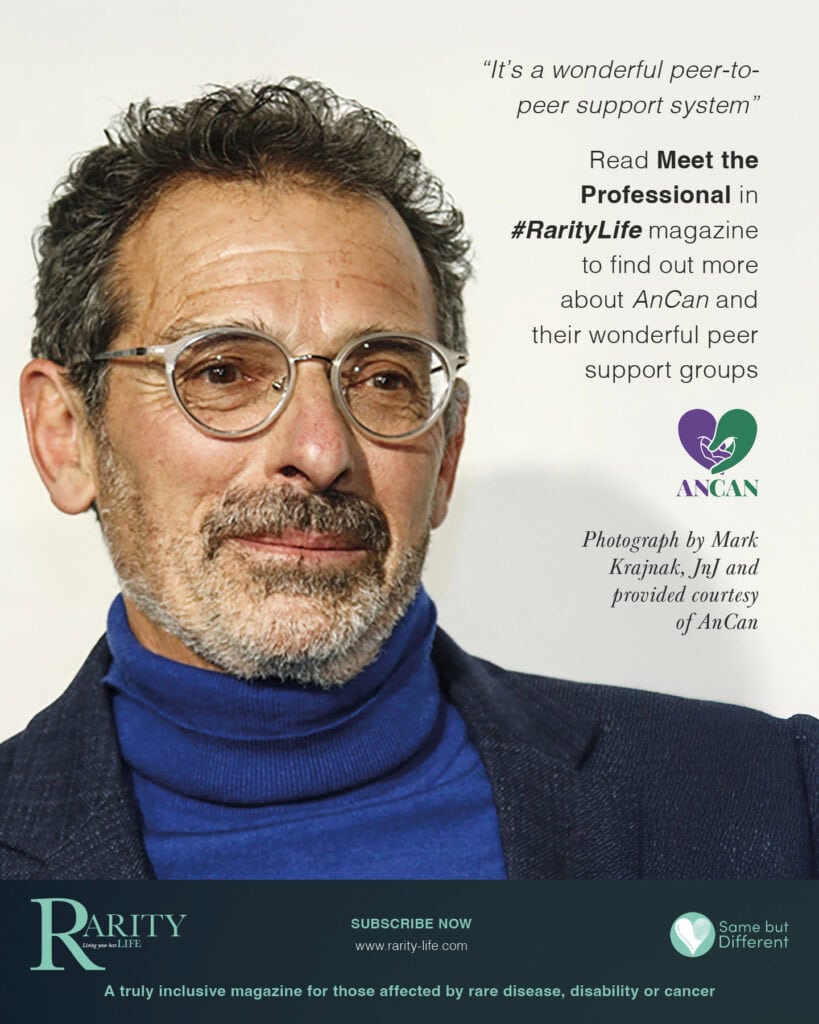
AnCan’s ambitious CEO and Founder, Rick Davis, recently sat down with Rarity Life, the magazine published by Same But Different Creative, to share the deeply personal journey that led to the creation of AnCan.
In the interview, Rick reflects on his early days navigating a prostate cancer diagnosis — a moment that reshaped his life & his understanding of what true support should look like. Like so many survivors and thrivers, he quickly discovered that information alone isn’t enough. What people often need most is connection — the chance to speak openly with others who truly understand the lived experience of cancer.
That realization became the foundation of AnCan.
Rick shares how traditional support models don’t always meet people where they are. Geographic limitations, physical health challenges, financial strain, rare diagnoses, and even the emotional weight of walking into an in-person group can all create barriers. For many, simply showing up can feel overwhelming.
AnCan was built to remove as many of those barriers as possible.
Rick’s full interview in Rarity Life offers an inspiring look at leadership shaped by lived experience, and a reminder that meaningful change often begins with one person asking: How can we do this better?
As some of you may know, the liberal telehealth rules to conduct medical appointments remotely that were enabled during Covid, sunsetted late last year. AnCan was upset and vocal that many of our patient advocacy organizations active on The Hill did not campaign more widely to extend it. Organizations like ZERO (prostate cancer) have significant and expensive government relations groups precisely to address such issues on behalf of us patients. AnCan had to bring it to ZERO’s attention to move the ball at a time when ZERO’s high paid CEO was self-admittedly sleeping on the switch.
Telehealth was temporarily extended for those living in rural areas. Then one of our newly minted prostate cancer Moderators, David Sharpe, brought it to AnCan’s attention that legislation was passed on Feb 3, 2026 that has extended comprehensive telehealth through the end of 2027. We asked David to blog its welcome return to wider availability and tell his story around telehealth – thank you Mr. Sharpe!
Medicare Telehealth Coverage Is Extended
The federal government has restored Medicare coverage for telehealth until the end of 2027. That means you can now possibly consult with your doctors online rather than having to meet with them in-person.
Why did I say possibly? Because state medical licensing laws still apply. Often, they can undermine your doctor’s ability to join you on the call. Here’s why: (Don’t construe the following comments as legal or medical advice. This is general information only.)
Telehealth consultations are easiest to arrange when a patient and doctor are in the same state. For instance, if you live in Springfield, Illinois, and want to have a virtual chat with an oncologist in Chicago, no legal impediments are likely to stand in your way.
Things can get tougher if the doctor practices in another state. Physicians are typically required to be licensed in the state where the patient is physically located during the consult. Therein lies a common problem: the doctor is licensed in one state, and you’re in another.
But loopholes exist. According to the Center for Connected Health Policy (CCHP), “A few states have licenses or telehealth-specific exceptions that allow an out-of-state provider to render services via telemedicine in a state where they are not located, or allow a clinician to provide services via telehealth in a state if certain conditions are met (such as agreeing that they will not open an office in that state). Still other states have laws that don’t specifically address telehealth and/or telemedicine licensing, but make allowances for practicing in contiguous states. . . .” For specifics about your state’s rules, explore CCHP’s handy state-by-state guide: https://www.cchpca.org/topic/cross-state-licensing-professional-requirements/.
Despite those exceptions, many physicians and medical centers require patients to be in the same state as the doctor during telehealth appointments. I wish I’d known that last year, before trying to set up virtual consultations from my home in Portland, Oregon, with Fred Hutch (Washington), UCSF, City of Hope (both California), and MD Anderson (Texas0—all of whom turned me down. Oregon Health & Science University (OHSU, Oregon)) would have refused, too, if I had been in any other state.
But some physicians and hospitals were more relaxed about it. Despite remaining in Portland, I wrangled a telehealth visit with a UCLA specialist. Two AnCan buddies of mine in Oregon and Arizona did so as well. I had even better luck with out-of-state doctors in community practices. Two agreed to confer with me online, and one declined.
If you live near—but not in—the state where your doctor practices, perhaps the easiest option is to make a run for the border. One AnCan member has adopted that strategy as a convenient means of communicating with his faraway medical team in an adjacent state while also satisfying the legal requirements. To have that meeting, he travels a few miles from home to a casino just across the state line; the casino lets him conduct telehealth consultations there. That approach shaves hours off what would otherwise be a protracted road trip to talk with his doctors face-to-face. # # #
Most AnCan’rs have never participated in our Advanced Cancer Care Partners Support Group. While relieved that you’re not counted in this group, you are missing a gem. The group is chock-full of compassion and practical suggestions. One of the reasons for that was our remarkable Co-moderator, Pat Washburn, GRHS.
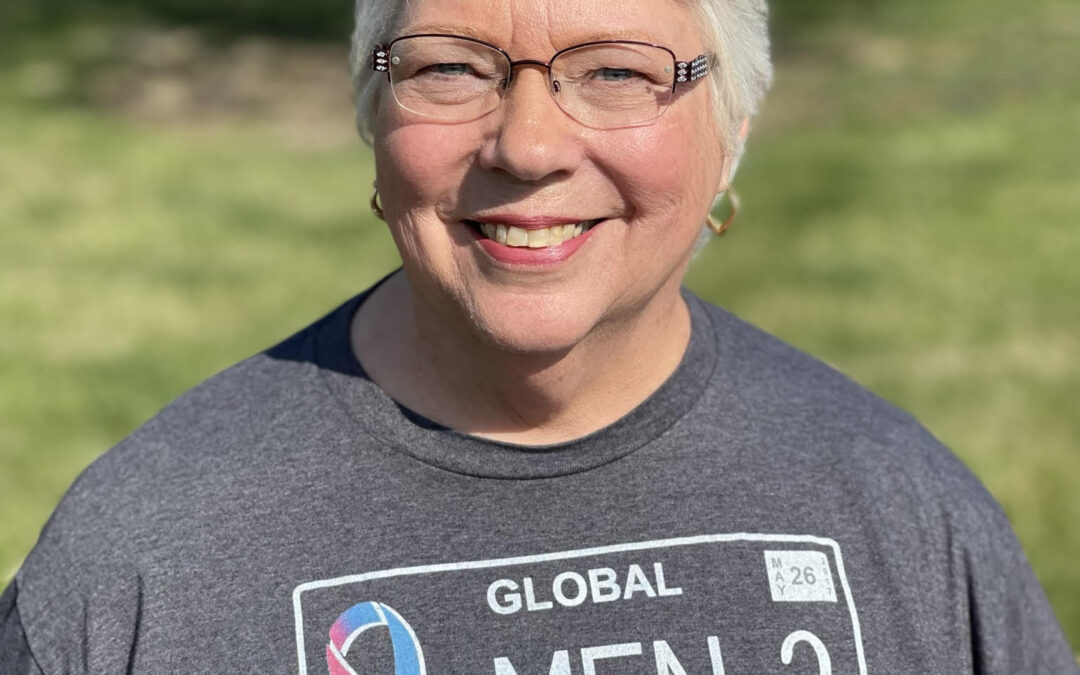
Pat absolutely radiated love and compassion while being none too short of gumption. That’s a polite Britishism for “piss and vinegar,” defined as ‘shrewd or spirited initiative and resourcefulness. ‘ After her dear husband, Marlyn, died in 2017, 5 months after being diagnosed with breast cancer, Pat made it her mission in life to make the world aware of Male Breast Cancer.
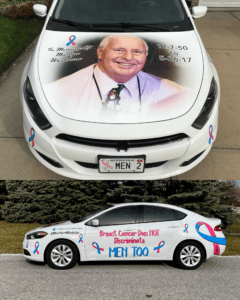
She took Marlyn’s car, had it decorated with his photo and Male BCa awareness icons, then took to the road. North, south, east, and west she travelled – every year. People stopped her at gas stations and restaurants; she made the local newspapers and TV stations everywhere. And always it was the same message. “Men get breast cancer, too!”
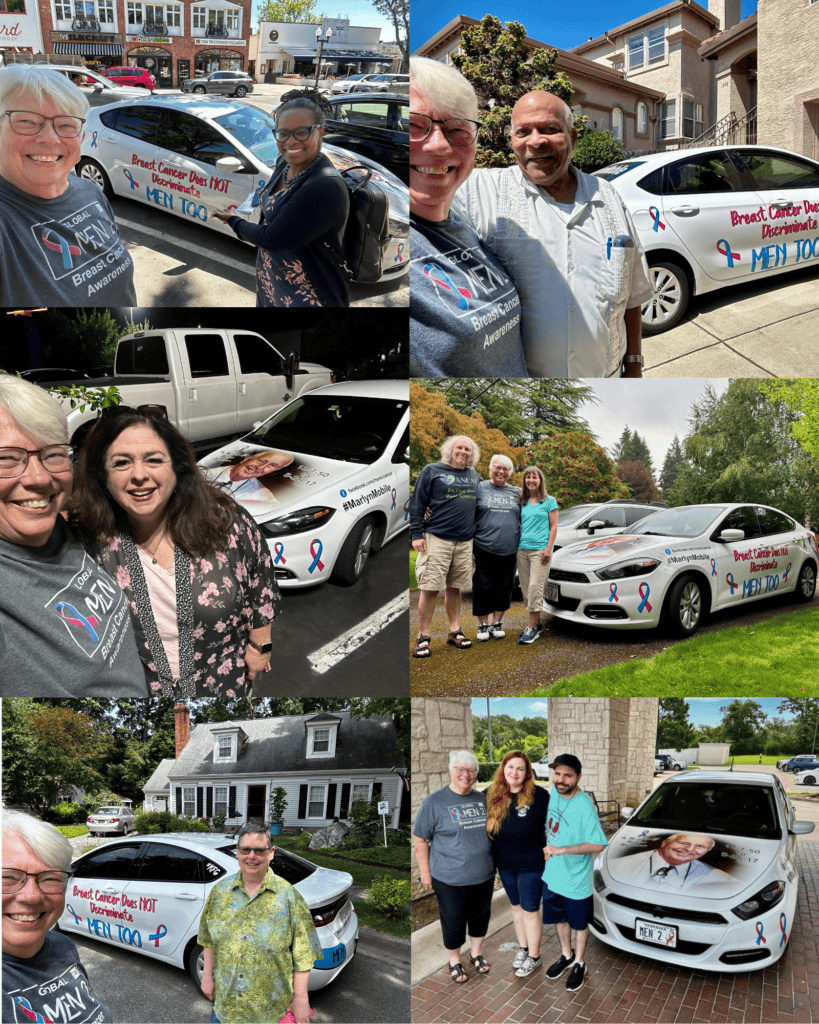
The world was her oyster, and Pat took the campaign to Europe on several occasions, including Spain and Scandinavia. Her travels were not just about awareness – she visited ‘her men’ and their care partners wherever she went. She also went out of her way to meet the AnCan’rs she’d met through our Group, most recently Alexa and Brian, on her way to Houston. See who else you can recognize below…
By and large, Pat paid for all her advocacy on her own dime. A couple of the male breast cancer organizations with whom she was affiliated did not treat her well. AnCan first met Pat when she reluctantly co-moderated our now-defunct Male Breast Cancer Support Group, disembowelled by one of those groups. Reluctant because Pat thought she’d be intruding on the men, BUT they loved her. At the time of her passing, AnCan was working with Pat and Bill Harris to reinstate the group – we still hope to in Pat’s memory (anyone interested, please reach out to me at rd@ancan.org).
Except when travelling or attending one of her Grandies’ or Great Grandies’ school or sporting events, Pat was always present to support Her Majesty, The Queen of DeNile – our Care Partner Lead Moderator, Susan Lahaie. So when she failed to show at a meeting on Aug 18, we reached out. Pat had been hospitalized after fainting on her face, diagnosed with multiple pulmonary embolisms; she looked like the Lone Ranger. During her hospital stay, those clots travelled to her brain, and Pat suffered a second, fatal stroke last week, elected hospice, and died on October 2nd.
All of us at AnCan are deeply saddened and wish her entire family much comfort. Pat’s entire family doesn’t do it justice. She was truly a matriarch with 35-40 Grandies and Great-grandies. In time, Pat’s memory will always be a warm, embracing memory to all who knew her.
Pat Washburn’s obituary can be found here.
Below is the Virtual Celebration of Life for Pat Washburn, held on November 2nd, 2025
“Someone I once loved gave me a box of darkness” –Mary Oliver
I was at a 12-Step-oriented workshop about grief recently, and it made me think about Men Speaking Freely (MSF). We are vaguely aware of grief in all MSF groups, it hangs over us, and we have at times focused on some specific griefs/losses, such as vitality, or a longer life. It is commonly thought that not thinking about a loss, not talking about it is the manly thing to do. Here in MSF we get relief by sharing our common losses with each other.
The presenter of that workshop, Marcia C., had some ways to specifically talk about grief that were new to me. She gave me permission to use some of her material here. She pointed out some types of losses that I hadn’t realized. For example, the loss of who I would have been if cancer didn’t happen, the grief of estrangement, loss of work, of status, of friendship; the loss of never having had something, that of aging, of trust, or of giving up something.
She said there is “unacknowledged grief” when such losses are never fully brought to consciousness. When I looked at her long list of examples I saw many that I have. We ought to watch for unacknowledged grief.
She described “non-finite” grief, which has no end-point other than death. Ours could be in that category, since as time goes by our loss increases instead of lessens.
Marcia said, ‘’Sharing your grief is a way to receive validation and compassionate witnessing. It can help you begin a path to healing and/or finding a way to live with grief.
Consider the questions below:
1. Are there griefs you haven’t realized you have or have been afraid to face?
2. Are there griefs about which you’d like to share?
3. Do you have grief practices that might be helpful to others?
4. Make a list of griefs you’ve experienced.
5. Choose a tool from the list that might help you process your grief.”
That list of “tools” was long; it included things like: write a letter or poem describing our loss…Create a ritual of letting go…Share with others who have had similar losses…Visit a place that is meaningful…Make or buy a talisman that helps you feel protected…Dance, run, yell to get your feelings out of your body…Plant something in remembrance or as a new beginning…Start a new tradition…Do an intentional funeral… These are ways to bring acknowledged, unacknowledged, and non-finite grief out for a conscious conversation. Moving from covert to overt, with the goal of making a relationship with the loss, and getting rid of the unconscious silent prolonged scream that I, for example, think I harbor.
We think of grief as emotional, but in “Dealing With the Physical Impact of Intense Grief” by Batya Swift Yasgur, the author describes the variety of physical reactions to grief. Ranging from elevated blood pressure to takotsubo cardiomyopathy — sometimes called “broken heart syndrome” — which is a “stress response that balloons the heart.” We often wonder about the reaction on our immune system, and its implications to our overall survival. In fact, probably nearly all our systems react to grief in some way.
There is a fairly new grief-related diagnosis in the Diagnostic and Statistical Manual and the International Classification of Diseases, describing a “persistent and pervasive grief response” that goes on longer than a year., and is now called Prolonged Grief Disorder. In order to be diagnosed with Prolonged Grief Disorder, a person must experience at least three of eight additional symptoms that include “disbelief, intense emotional pain, feeling of identity confusion, avoidance of reminders of the loss, feelings of numbness, intense loneliness, meaninglessness, or difficulty engaging in ongoing life” according to Columbia University’s Center for Prolonged Grief. For an adult to meet the criteria for a PGD diagnosis, the death of a loved one must have occurred at least one year ago, and the symptoms must be present most days since the loss and nearly every day for at least the last month.
Our situation is different from losing a loved one (although it includes that) and waiting for the grief to go away. Instead of a major loss which goes farther and farther into the past, our major loss is in the future. We have sort of a reverse Prolonged Grief Disorder. For instance, I expect my losses to get worse and worse until death.
A couple of weeks back, we posted Medicare Health Insurance Choices that explained the differences and pitfalls between traditional Medicare Part A and B plus Medigap insurance plans to Part C, Medicare Advantage. Click the link earlier in the previous sentence if you missed it.
As many already know, there is a Part D that covers drug costs. It is either purchased as a separate plan or rolled into Part C Advantage. Drug coverage is significantly changing this year, and AnCan has learnt that many of our participants are not yet aware. Hardly surprising because CMS as well as the various stakeholders like Payers and providers have done very little to let us patients know. Why should they? – we’re only the ultimate consumer!
The same cannot be said of JnJ who started educating patient advocate organizations this past May. In October and November JnJ created more education that includes a webinar and a round table coming up hosted by NAMAPA, the National Association for Medication Access and Patient Advocacy. Likely you have never heard of them. I hadn’t and it hardly rolls off the tongue. Nonetheless, the webinar was very instructive and you can watch it here.
The BIG difference for us patients is that no matter what, out-of-pocket drug costs for 2025 cannot exceed $2000. You heard right – for those of you on specialty oral medications like Nubeqa (darolutamide for prostate cancer) or Aubagio (teriflunomide for MS), normally sourced via specialty pharmacies, you will meet this cap January. And you’ll even be able to spread the payment over 12 months! More on that to follow.
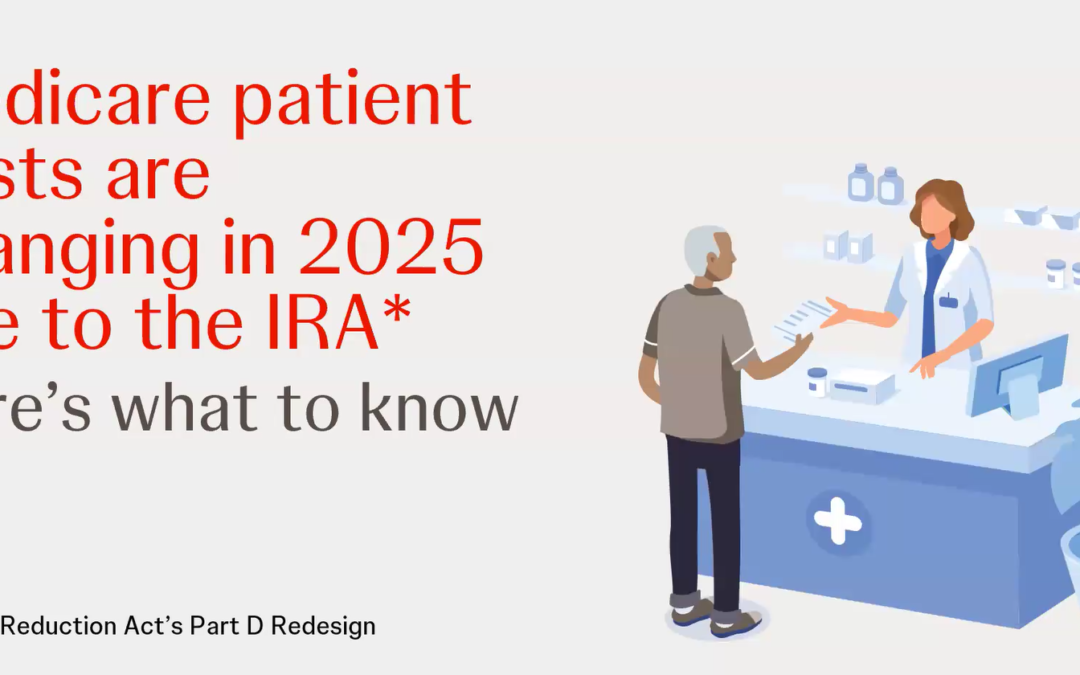
But first, how is this coming about. Well it tracks back tot he changes brought about by the Inflation Reduction Act signed by President Biden in 2022. He promised to make drugs more affordable, and this is a part of the plan. As you can see in the slide to the left comparing 2024 to 2025, the donut hole has been eliminated. In its place, the Payer (Plan Sponsor) and Pharma (manufacturer) are paying more. While the cost saving is very positive, it will likely impact us patients in other ways:
Your formulary choice may be reduced – so CHECK your medications before you renew.
Premiums for Part D may increase – even though out of pocket is capped. If you are unlikely to spend $2,000, look for a plan that defers your co-pay as long as possible
Higher premium plans should cover a larger portion of drug costs earlier. Your premium does NOT count towards the $2,000, so include premiums in your cost calculation to figure your exposure.
If you have a co-pay or co-insurance on your drugs, no matter if it’s Part C or D, it cannot exceed $2,000. However the amount you pay and who you pay it to may become a bit of a moving target. We mentioned earlier that you will now have the opportunity to spread your payments over the calendar year – or the remainder of it, if you sign up late or incur costs late in the year. The Medicare Prescription Payment Plan (M3P) takes your share of drug costs, up to a maximum of $2,000, and spreads them over the remainder of the year.
The simple example is for those on specialty pharmaceutical drugs like Nubeqa or Aubagio. Since your share of the drug cost is almost certainly going to be greater than $2,000 in January, if you opt in for M3P BEFORE going to the pharmacy or ordering from your mail order pharmacy, you’ll pay nothing on picking up/shipping the drugs. Subsequently, you’ll get a separate bill from your Payer for $167.67 monthly over 12 months, and pay no more for any of your drugs the rest of the year. There is NO interest, no late fee penalties, and you get a couple of months leeway, but there are penalties if you never pay. You can sign up for MP3 with your Medicare Payer/Plan Holder BUT not in the pharmacy for 2025. So if you arrive at the drug store prior to enrollment, you’ll be charged $2,000 to take your pills home. You can leave the pills, go home, enroll and return to the pharmacy 24 hours later and pick up without payment to the pharmacy..
If you don’t start this expensive drug until mid year, say September, and you’ve spent nothing on drugs prior, then the $2,000 is billed over the last 4 months at $500/month.
But what if your drug costs are more lumpy – they go up and down the whole year. In that case, the payments get recalculated each month and the monthly bill will vary.
There is a strange case too, if you know your co-pay is the same each month – say $55. This really throws M3P, and as you can see to the left, you’ll pay the same $660 (12x $55) either way but in different amounts each month if enrolled in M3P.
Finally, let’s address the Drug Benefit plans that many of you enjoy through PAN, PAF and others. Even the drug discount cards from Pharma that some receive. Whatever you receive, or however you receive it, does NOT reduce your $2,000 exposure. You advise the pharmacy that you have a benefit, and they bill the Benefit Provider (PAN, PAF, Pharma ??). The credit will be applied against your drug cost, although eventually you may still be liable for up to $2,000 co-pay when the benefit runs out.
Looking at the first slide, it seems to AnCan that these benefits that are often funded by Pharma, eventually flow back to Pharma and the Payer. How they will credit them against what the patient owes is not yet clear. Before you get too crazed, our guess is the system has to change. These benefits need to be channeled directly to patients who cannot afford $2,000 p.a. AnCan is on it and already reaching out to NAMAPA and others to promote more of a direct, income based subsidy possibly reaching more beneficiaries. One thing we have heard – APPLY EARLY for 2025 in the event you are in line to receive a subsidy.
PLEASE BE SURE TO SIGN UP FOR THE M3P PROGRAM UPFRONT. EVEN IF YOU OWE $2,000 IT WILL BE BILLED IN 12 INSTALLMENTS. WE STILLL HAVE TO FIGURE HOW YOU WILL BE REIMBURSED IF YOU RECEIVE ASSISTANCE.
IF YOU HAVE A GRANT BE SURE TO PROVIDE DETALS TO THE PHARMACY ASAP. NOTWITHSTANDING, ALSO REACH OUT TO YOUR GRANTOR TO FIND HOW THEY WANT TO COORDINATE THE GRANT. IT’S STILLL A MOVING TARGET!


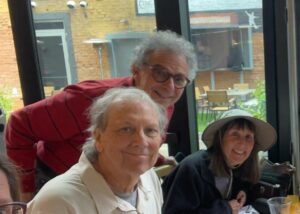 Mark and Kathy Baldridge are avid birders, and as a result, frequent visitors to “Deep Southern Arizona” from their home in University Place, Washington. You may have seen them in an AnCan Group – we’ve been supporting the Baldridges since 2021.

 By and large, Pat paid for all her advocacy on her own dime. A couple of the male breast cancer organizations with whom she was affiliated did not treat her well. AnCan first met Pat when she reluctantly co-moderated our now-defunct Male Breast Cancer Support Group, disembowelled by one of those groups. Reluctant because Pat thought she’d be intruding on the men, BUT they loved her. At the time of her passing, AnCan was working with Pat and Bill Harris to reinstate the group – we still hope to in Pat’s memory (anyone interested, please reach out to me at rd@ancan.org).
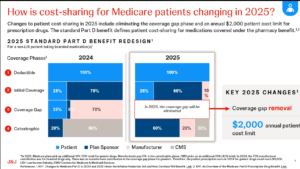 and this is a part of the plan. As you can see in the slide to the left comparing 2024 to 2025, the donut hole has been eliminated. In its place, the Payer (Plan Sponsor) and Pharma (manufacturer) are paying more. While the cost saving is very positive, it will likely impact us patients in other ways:
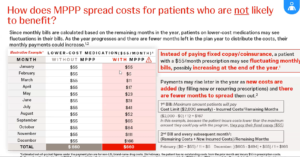 But what if your drug costs are more lumpy – they go up and down the whole year. In that case, the payments get recalculated each month and the monthly bill will vary.