
by Rick Davis | Oct 11, 2024 | Blood Cancers, Health Resources, High Risk/Recurrent/Advanced, High Risk/Recurrent/Advanced Prostate Cancer, Low/Intermediate Prostate Cancer, mCRPC, Men 'Speaking Freely', Men's Breast Cancer, Multiple Sclerosis, Pancreatic Cancer, Prostate Cancer, Recent News, RMC, Sarcoidosis, Thyroid Cancer, Veterans
Medicare Health Insurance Choices
With Open Enrollment starting on October 15, two AnCan’rs asked for advice this week on Medicare plans – and yes it’s complicated. AnCan recommends you watch the webinar we held last October to help understand the difference between traditional Medicare and Medicare Advantage. The dollar details are different for 2025 but not the principles.
We also suggest you visit the Triage website and attend its free webinars. Many of their resources can be found at https://triagecancer.org/medicare-cancer
Lastly, my own health insurance broker, Kim Umphres, is licensed to write in 15 States. He offered his help to all in last year’s webinar, so take him up umphres100@yahoo.com
Since the same questions are likely in the mind of many others, I have written this Blog Post. I am no expert but this may illustrate how I think about my own health insurance. Sadly, I cannot help you all individually – consult with your own Medicare health insurance for the best advice.
Onward & upwards, rick
Many of us on Medicare are faced with renewing our plans – or buying a plan for the first time. If you choose not to buy a plan to supplement Medicare, it leaves you exposed to roughly 20% of your medical costs. That can amount to very big bucks!
The main choice is whether to opt for Traditional Medicare + a Supplement (Medigap) Plan + a Drug Plan. Alternatively, a Medicare Advantage Plan can look attractive but comes with warts.
If you are low income and cannot afford the available plans, there are Medicaid alternatives for Medicare supplements.
Advantage Plans (Plan C) restrict your choice of Health Care Providers since they are based on Provider Networks. If you need a particular type of specialist, for example a genitourinary medical oncologist, or a neurologist who specializes in MS, this can be a problem with Advantage. Community Standard of Care is often the byword. If you choose an Advantage Plan, be sure it covers HCPs who practice at a Center of Excellence.
Advantage Plans usually have small monthly premiums, sometimes zero. They also include co-pays when you visit a Provider. Co-pays can be anywhere from Zero dollars to several hundred for fancy scans like PSMA, so you have to look carefully at the coverage. The more you use the plan, the more you pay. Some may include coinsurance – avoid those altogether. It’s a nuance we won’t get into here.
You can also go out of network to a Provider of your choice, but copays will be significantly higher. For example, you may pay $50 for a visit to a specialist in-network. Out-of-network, the cost can be significantly higher – often 40% of the approved Medicare fee for the service sought.
Advantage Plans often have a Gatekeeper who must approve any referral. You may not be able to self refer. Also there can be stricter intervention by the Plan to pre-approve procedures.
Drugs are included, however there is also a co-pay for some generic and all branded drugs that depends on the tier in which they are classified in the Plan’s drug formulary. List the drugs you use and find the cost. That said, the good news in 2025 is that drug out-of-pocket costs cannot exceed $2,000.
Traditional Medicare with a Supplement (Plans F,G,K,L,M,N) may not restrict your choice of HCPs – you can go anywhere in or out of state provided the Provider accepts Medicare.
Traditional Medicare Supplement Plans cover the 20% not covered by Medicare A and B. You pay a monthly premium that varies according to the plan chosen. The different supplement plans have different features. The more you pay in monthly premium, the less the restrictions and the lower the deductibles.
In addition you will need drug coverage (Plan D). Again that includes a monthly premium, plus a charge for each drug, so you have to shop plans against your Rx. For 2025, drug out-of-pocket costs cannot exceed $2,000.
As long as your chosen Provider accepts self-referrals, there may be no Gatekeeper. Procedures and protocols may still be subject to pre-approval.
Since Advantage Plans can be more profitable for the Payer, they offer lots of bells and whistles to sell the plan – for example subsidies for OTC products. One plan I was offered recently, actually pays the Holder $5/month!
I’m trained as an economist so I look at risk reward. I compare the annual maximum out-of-pocket cost between the Advantage Plan and the Traditional Medicare Plans (inc. the drug plan).
For traditional Medicare There is a required monthly premium for both the Supplement and the Drug Plan. Add those together and multiply by 12. In addition you can have out-of-pocket drug costs, especially if you are using expensive cancer drugs, but that cannot exceed $2,000 in 2025. Btw, the $2000 will decrease in subsequent years.
Each Advantage Plan has a stipulated maximum out-of-pocket cost for in-network and out-of-network Providers. In-network will be less. I look at the out-of-network max, and add to that any monthly premiums that are usually minimal. Drugs are included with a co-pay, but that co-pay cannot exceed $2,000 in 2025.
Now that I know what I HAVE to pay with Traditional + Supplement vs what I could pay with Advantage depending on my usage, I can compare whether I want to roll the dice to save money.
If the Traditional route costs me $500 in monthly premiums, I know I am out-of-pocket $6,000 plus my drug copay costs capped at $2,000.
Say my Advantage Plan has a monthly premium of $25, then for sure I am out of pocket $300. The rest depends on how much medical care I use. Assume ( the economist’s favorite word) the out-of-pocket for out-of-network in my plan is $8,000, that is my max. I still have to consider up to $2,000 for drugs.
Let’s compare!
IN THE WORST CASE I am spending $6,000 (+ drugs) for Traditional Supplement versus $8,300 (+ drugs) for Advantage. The Advantage could be $2,300 more pricey.
IN THE BEST CASE, I am out-of-pocket $300 (+ drugs) for Advantage vs $6,000 (+ drugs) for Traditional Supplement, so I could save $5,700 with Advantage.
Risk-Reward… do I want to roll the dice to save up to $5,700 that could cost me an extra $2,300??
Each person has to make that decision.
There’s more to it than this. For example HMO’s like Kaiser Permanente may make it even harder to go out of network. And with KP, you are guarantied to only get community Standard of Care medicine . As I often say, KP is great as long as you don’t get seriously ill.
AnCan strongly suggests finding a local Medicare Health Insurance Agent to help you sort through this morass. Plans change by State, so your agent must be licensed in your State.
And one last thing. The first time you enter Medicare there is NO underwriting. No matter your preconditions, you are accepted to any Traditional supplement or Advantage Plan. In subsequent years, you may be subject to underwriting should you choose to switch plans. You can be restricted from changing between an Advantage and Traditional Supplement Plan.
AnCan recommends
watching our webinar from last October to help understand the difference between traditional Medicare and Medicare Advantage. 2025 details are different but not the principles.
For differences between the Traditional Supplement Plans, consult with a specialized Medicare Health Insurance agent. F and G are the best options. There are also high deductible options. An agent can also help you compare Advantage plans by various criteria, like maximum out-of-pocket for out-of-network care.

by Kiernan Mehan | Aug 5, 2024 | Active Surveillance PCa, Blood Cancers, Cancer Resources, Health Resources, Low/Intermediate Prostate Cancer, Men 'Speaking Freely', Pancreatic Cancer, Prostate Cancer, Recent News, RMC, Thyroid Cancer
Preserving Fertility for Men with Cancer: Options and Overcoming Barriers
By: Mark Perloe
For men facing cancer treatment, the risk of infertility is a major concern that is often overlooked. While fertility preservation options exist, studies consistently show that a significant proportion of patients are not adequately informed or offered these choices by their healthcare providers before undergoing potentially sterilizing cancer treatments.
The main barriers to men being aware of fertility preservation include limited knowledge and training among providers, discomfort discussing the sensitive topic, low referral rates to reproductive specialists, logistical challenges, time constraints before treatment initiation, perceptions about appropriateness based on prognosis, and patient-related factors like lack of awareness and financial concerns.
It is crucial for men to understand their options for preserving fertility, which include:
Sperm Cryopreservation (Sperm Banking)
This standard and most effective method involves collecting and freezing sperm samples before treatment for future use through assisted reproductive techniques like intrauterine insemination (IUI) or in vitro fertilization (IVF) with intracytoplasmic sperm injection (ICSI). It is well-established and successful for post-pubertal males.
Testicular Tissue Cryopreservation
An experimental approach where testicular tissue is removed and frozen before cancer treatment. The frozen tissue may potentially be used later to extract sperm stem cells for reimplantation or to induce in vitro spermatogenesis. However, no live births from this method have been reported in humans yet.
Gonadal Shielding
Protecting the testicles from radiation damage by using lead shields during radiotherapy. Its effectiveness is limited by patient anatomy and radiation field requirements.
Sperm Retrieval
For males who cannot produce a semen sample, sperm can be surgically retrieved from the testicles or epididymis through techniques like testicular sperm extraction (TESE) or percutaneous epididymal sperm aspiration (PESA). Retrieved sperm can then be used for IVF/ICSI. This invasive option is appropriate when a male cannot produce a semen sample due to conditions like anejaculation, obstructive azoospermia, or prior to puberty.
While sperm cryopreservation is the most established and successful fertility preservation method, sperm retrieval combined with IVF/ICSI can be an option when cryopreserved sperm is unavailable or inadequate. However, IVF/ICSI is more invasive, costly, and has lower success rates compared to using cryopreserved sperm for insemination.
Overcoming barriers to awareness and utilization of fertility preservation options requires improved education and adherence to clinical guidelines from organizations like the American Society of Clinical Oncology (ASCO) and the American Society for Reproductive Medicine (ASRM). Establishing formal fertility preservation programs with multidisciplinary teams, patient navigators, and educational initiatives can help ensure that men with cancer have the opportunity to make informed decisions about preserving their fertility before undergoing cancer treatments.
For questions, please contact Mark Perloe at mperloe@outlook.com
by Rick Davis | Jul 29, 2024 | Active Surveillance PCa, AYA, Blood Cancers, Brain Tumors, Cancer Caregivers, Cancer Resources, Complementary Medicine, Health Resources, Low/Intermediate Prostate Cancer, Men's Breast Cancer, Multiple Sclerosis, Ovarian Cancer, Pancreatic Cancer, Prostate Cancer, Recent News, RMC, Sarcoidosis, Thyroid Cancer, Women's Breast Cancer
Helpful Tips to be Your Own Best Medical Researcher
AnCan asked Mike Wyn, a valued AnCan Frequent Flyer and intrepid researcher, to provide a little navigation to those who are new to research… as well as useful tips for some old hands like myself. I’ve already gathered some research nuggets from Mike’s wisdom… thank you, Mr. W.
Here are a few tips ensure the medical information you are researching is reliable and accurate
Book Research
Check the publication date: authors may need at least a year to write a book, and the average time between a book’s acceptance and its publication is typically between 9 to 12 months. Hence, the data may already be outdated when it hits the shelves
Professional Presentations
Check the credentials, disclaimers, and disclosures of the presenters. Who is the author? What is the sponsoring organization providing the information? Preferred sources are from reputable institutions, such as universities, hospitals, or government health agencies.
Google Web Searches
Use command “site:” to limit you search to top-level domains like .gov, ,org and ,edu. For example, type: latest NCCN guidelines for prostate active surveillance site: .gov OR site: .org OR site: .edu
Be cautious with .com sites unless they are from recognized and credible entities. Medical databases such as PubMed, Cochrane Library, and Google Scholar are good sources for cross-referencing scientific research.
Articles, Online Posts
Check articles, online posts, videos etc. for their sources, including scientific studies, medical journals, or clinical trials. Information from peer-reviewed journals is typically more reliable than content from non-peer-reviewed sources. Poor reviewed means that other people similarly qualified to the author have reviewed teh article adn provided comments.
Anecdotal Evidence
Anecdotal evidence is information that has been observed by the person reporting but not verified. Be skeptical of anecdotal evidence such as personal stories. It is not scientifically reliable. Focus on information supported by scientific evidence and clinical studies. The quality levels of evidence from highest to lowest for medical data are:
- Systematic reviews: collect and evaluate all available data/evidence within the researchers’ criteria. An example is the “Cochrane Database of Systematic Reviews”. Meta studies are a systematic review.
- Randomized controlled trials: participants are randomly assigned to experimental and control arms. The double-blind trial is the gold-standard of medical research where neither the participants nor the researchers know the placebo or medication/treatment is given. This is to prevent bias and to ensure the validity and reliability of the study.
- Cohort observational study: participants with common traits or exposure to the proposed medications or treatments are followed over a long period of time.
- Case study or report: a detailed report of result after treatment of an individual. This is formalized and reviewed anecdotal evidence.
Medical Trial Reports
The phases of medical trial studies cited by published medical papers are:
- Pre-clinical studies: laboratory experiments using cell cultures, animal or computer models. In vitro means tested In Vitro – literally ‘in glass’ means testing outside a living organism, in a test tube or petri dish, In Vivo – literally in life -means testing in a living organism, often mice. Then studies move on to humans…
- Phase I trials: assess safety, dosage and side effects of the proposed medications or treatment.
- Phase II trials: expand P 1 to evaluate efficacy of the proposed medications or treatment – how well it works..
- Phase III trials: confirm efficacy, safety, dosage and to evaluate side effects of the proposed medications or treatment in much larger samples. This is often where randomized blind and double blind design is used. Blind means the patient does not know what they are getting; double blind means neither the patient nor the clinician know what is being dosed.
- Phase IV trials: monitor long term effectiveness and safety of the medication or treatment.
Statistical Terms
Some terms regarding statistical data cited in medical journals are explained as follows:
- N = the number of participants: be wary of studies with a very low N.
- HR = hazard ratio: HR=1 – there is no change in the proposed medication/treatment compared to control baseline. HR<1 – there is a reduction of risks with the proposed medication/treatment. HR>1 – there is an increase risk with the proposed medication/treatment.
- CI = Confidence Interval: A trial shows that a particular drug has a 20% effect within a certain time frame with 95% CI. This shows that the study, if repeated many times, it will be 95% confident that the 20% reduction will be consistently observed.
- P-value = Probability Value: This measures how strong the evidence is that the hypothesis, or effect being tested, is correct, rather than the result being random, or incorrect (null hypothesis). We seek a P-value that is <=0.05 meaning that there is a 95% or better likelihood the result is attributable to what is being tested..
Editor: Advisory Board Member and The Active Surveillor, Howard Wolinsky reminded us of another presentation AnCan presented a few years back A Layperson’s Guide to Reading Medical Research – watch it!
by Alexa Jett | Mar 22, 2024 | Cancer Caregivers, Ovarian Cancer, Pancreatic Cancer, Prostate Cancer, Thyroid Cancer
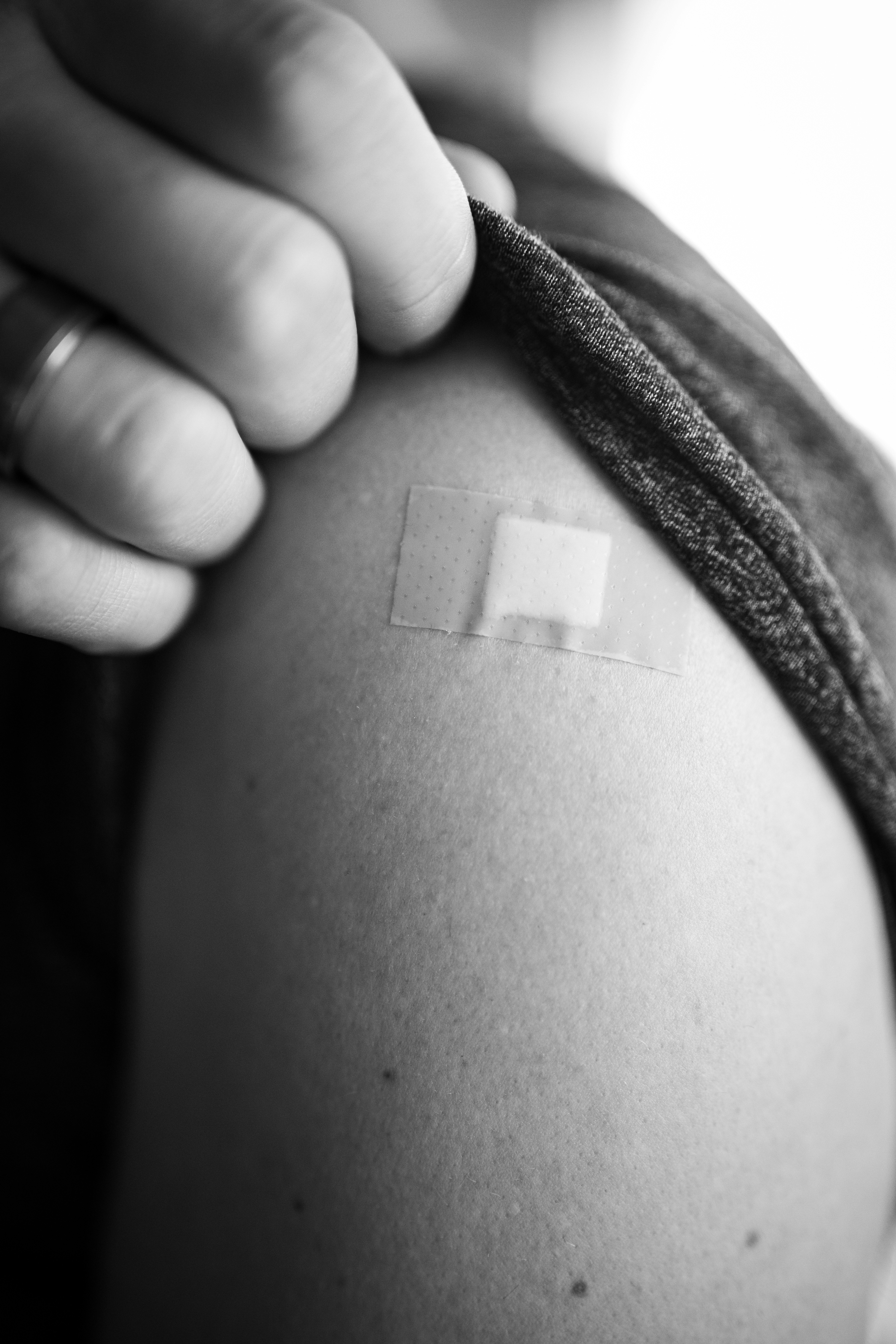
 Oh it’s not that kind of shot. It’s the other kind of shots, which require some modification for people with cancer. It just
so happens that ASCO (American Society of Clinical Oncology) has come out with new guidelines regarding vaccines for cancer patients.
The guidelines include a recommendation for doctors to take vaccination histories at the start of cancer treatment, followed by provision of recommended vaccines, re-vaccination after cancer treatments that wipe out immunity (for instance stem cell transplant), as well as vaccination of household contacts in order to protect the cancer patient.
We are more vulnerable to infection, because our immune system is injured by chronic inflammation, by the cancers, and by our treatments. Also, we don’t get as good an immune boost from some vaccines as people without cancer do.
If our immune system is “compromised” we can’t take live vaccines at all, and non-live vaccines aren’t as effective. Live vaccines contain weakened but still replicating virus or bacteria. They cause a mild infection in normal people, which triggers an immune
response. But for those of us with a weakened immune system, live vaccines, such as chicken pox/shingles, measles, mumps, oral typhoid, and German measles, can cause a real infection. Non-live vaccines are safe, including the new RNA vaccines. Non-live vaccines for different conditions can be given on the same day.
Here is a summary of recommendations, which I have shortened for prostate cancer:
- “Clinicians should determine vaccination status and ensure that adults newly diagnosed with cancer and about to start treatment are up to date on seasonal vaccines as well as age- and risk-based vaccines
- Vaccination should ideally precede any planned cancer treatment by 2-4 weeks. However, nonlive vaccines can be administered during or after chemotherapy or immunotherapy, hormonal treatment, radiation, or surgery
- Adults with solid and hematologic cancers traveling to an area of risk should follow the CDC standard recommendations for the destination
Note. Hepatitis A, intramuscular typhoid vaccine, inactivated polio, hepatitis B, rabies, meningococcal, and nonlive Japanese encephalitis vaccines are safe
- It is recommended that all household members and close contacts, where feasible, be up to date on vaccinations “
Here are some specific recommended immunizations for adults with Cancer:
| Vaccine |
Recommended Age |
Schedule |
| Influenzaa |
All ages |
Annually |
| RSV |
60 years and older |
Once |
| COVID-19 |
All ages |
As per the latest CDC schedule for immunocompromised17 |
| Tdap or Tdb |
19 years and older |
One dose of Tdap, followed by Td or Tdap booster every 10 years |
| Hepatitis B |
19-59 years: eligible
60 years and older: immunize those with other risk factorsc |
For adults 20 years and older, use high antigen (40 µg) and administer as a three-dose Recombivax HB series (0, 1, 6 months) or four-dose Engerix-B series (0, 1, 2, 6 months)18 |
| Recombinant zoster vaccine |
19 years and older |
Two doses at least 4 weeks apart |
| Pneumococcal vaccine |
19 years and older |
One dose PCV15 followed by PPSV23 8 weeks later
OR
One dose PCV20d |
| HPV |
27-45 years: shared decision making |
Three doses, 0, 1–2, 6-monthsAbbreviations: HPV, human papillomavirus; PCV, pneumococcal conjugate vaccine; PPSV-23, 23 valent Pneumococcal polysaccharide vaccine; RSV, respiratory syncytial virus; Td, tetanus and diphtheria; Tdap, tetanus, diphtheria and pertussis.
a Live attenuated influenza vaccine, which is administered as a nasal spray, cannot be given to patients with cancer.
bTdap has lower amounts of diphtheria and pertussis toxoid and is only used for those 7 years and older. DTaP, the pediatric vaccine for prevention of tetanus, diphtheria, and pertussis, is only for children younger than 7 years.
cHIV, chronic liver diseases, intravenous drug use, sexual risk factors, incarcerated individuals.
dPatients who have previously received PCV13 only can receive one dose of PCV 20 after an interval of 1 year.
|
Abbreviations: HPV, human papillomavirus; PCV, pneumococcal conjugate vaccine; PPSV-23, 23 valent Pneumococcal polysaccharide vaccine; RSV, respiratory syncytial virus; Td, tetanus and diphtheria; Tdap, tetanus, diphtheria and pertussis.
a Live attenuated influenza vaccine, which is administered as a nasal spray, cannot be given to patients with cancer.
bTdap has lower amounts of diphtheria and pertussis toxoid and is only used for those 7 years and older. DTaP, the pediatric vaccine for prevention of tetanus, diphtheria, and pertussis, is only for children younger than 7 years.
cHIV, chronic liver diseases, intravenous drug use, sexual risk factors, incarcerated individuals.
dPatients who have previously received PCV13 only can receive one dose of PCV 20 after an interval of 1 year.
Now, a few further details about some common shots:
COVID
The COVID-19 vaccines protect patients with cancer, reducing the risk of severe COVID-19 illness and hospitalization. The recommendation is to receive at least one dose of the updated 2023-2024 COVID-19 vaccine. For those on therapies which diminish the immune response, ASCO recommends additional vaccine doses after 2 months. It is recommended to postpone immunization for 2-3 months for individuals who have recently had a COVID-19 infection.
FLU
It is safe to vaccinate during chemotherapy or while white cells are low. But the nasal spray flu vaccine should not be given to patients with cancer.
Pneumonia
Patients with cancer are at higher risk for pneumonia. (Blood cancers 50 times the risk!) Pneumonia vaccines reduce the chances of getting pneumonia and the need for hospitalization.
Shingles
There is a new vaccine called RZV. It is non-live so OK for us. (the previous vaccine, a live attenuated type, is not recommended for patients with cancer.) RZV should be made available to all adults with cancer. This vaccine remains immunogenic even after cancer treatment has begun.
RSV
Patients aged 60 years and older with cancer are eligible to receive the respiratory syncytial virus vaccine.
Our immunity to tetanus, diphtheria, and pertussis weakens as we age, and this decline may be accelerated after cancer treatment. It is strongly recommended that individuals diagnosed with cancer receive the Tdap vaccine if they have not been vaccinated as adults.
Why bother?
“Infections are the second most common cause of non–cancer-related mortality within the first year after a cancer diagnosis, with most of these deaths attributed to influenza and pneumonia, deaths that can be prevented throughimmunization. While patients with cancer have lower immune responses to influenza and pneumococcal vaccines, evidence supports the safety and benefits of vaccinations in reducing the severity of infections and associated hospitalizations.”
Often we will see the term “immunocompromised.” Does this apply to us? This term is not, to my knowledge, precisely defined. For those of us with prostate cancer, it usually means neutrophils (a type of white blood cell) are down below 1000 cells per microliter of blood, and is usually due to our treatments. The immune system is complex, and there are many ways to become “immunocompromised.” Anyone on chemotherapy could be considered to be immunocompromised. .Ask your oncologist if you fit this category, and if you know of a clear generally accepted definition, please write to me.
The authors sum up: “A cancer diagnosis can be overwhelming, and vaccination may not be an immediate priority in the treatment plan. However, numerous studies consistently highlight the best protection when vaccines are administered before starting cancer treatment, emphasizing the need for early vaccination.”
Special thanks to beloved AnCan moderator and Advisory Board member ‘Dr. John’ for providing this wonderful write up!

by Rick Davis | Dec 8, 2023 | Active Surveillance PCa, AYA, Blood Cancers, Brain Tumors, Cancer Caregivers, Cancer Resources, Complementary Medicine, Health Resources, mCRPC, Men 'Speaking Freely', Men's Breast Cancer, Mental Health, mHSPC, Multiple Sclerosis, nmCRPC, Ovarian Cancer, Pancreatic Cancer, Prostate Cancer, Recent News, RMC, Thyroid Cancer, Veterans, Women's Breast Cancer
Bang your drum… it could make you smarter and healthier!
I don’t want to work
I want to bang on the drum all day
I don’t want to play
I just want to bang on the drum all day
–Todd Rundgren
Twice in the last several months, the topic of drumming came up in our AnCan Men Speaking Freely group and it generated some excitement both times. So this month’s invite will be on that topic.In my former practice whenever I have given a non-verbal treatment there is a big relief that no talking is involved. In bypassing the verbal and left-brain systems we gain access to a typically unused part of ourselves. I wonder if we can use this approach to cope with our serious illnesses and have a better life?
Our brains have a characteristic called plasticity, the ability to change. You may have heard of this regarding the little finger brain circuit of violinists; it grows as they become proficient. Drummers also have different brains than the rest of us. They have fewer, thicker nerve fibers between the two halves of the brain. They have more efficiently organized motor cortices. (Schlaffke, 2019). Because of this, drummers can do things that we can’t. They can coordinate the two sides of the brain better, and perform motor tasks with greater efficiency. They can play different rhythms with each hand and foot at the same time.
Schlaffke’s subjects had drummed many hours per week for decades. But Bruchhage’s (2020) subjects trained for only 8 weeks and showed several changes in the cerebellum plus changes in the cortex, showing not only cerebellar plasticity but also communication and coordination between the cerebellum and brain sensorimotor areas as well as areas for cognitive control.
Drumming is very complicated, which is why it’s unfair that the lead guitar and vocal guy gets all the girls (Greenfield, J. 2022).
For some reason, there is a close association between beat synchronization (integrating auditory perception with motor activity) and reading ability in children (Bonacina, 2021). Higher synchronization ability predicts better literacy skills. Maybe early intervention involving drumming can improve literacy in kids?
Cahart et.al (2022) showed that drumming can improve behavioral outcomes for autistic adolescents and elucidated some of the neurology involved. Does this mean it could help us?
Drums have been used for millennia for healing, inducing trance, and even psyching up soldiers.
We have learned that drumming is not just about waking up the right brain, but also about connecting the sides of the brain, and the cerebellum with the cortex. It can induce alpha brain waves. It can release endorphins. Even T-cells respond to drumming (Bittman). It induces present-moment experience, which we often work toward to deal with death anxiety. Interpersonal connections are made when people drum together. Despite the effort involved, it induces relaxation. I have come across papers describing drumming and music therapy for a wide variety of emotional problems and currently, there are 8000 music therapists in the US.
How about for us? We see above the possibility of reductions in anxiety, tension, pain, isolation, depression, and over-thinking the past and future. There are many studies of music therapy in ICUs, with patients on ventilators, easing hemodialysis pain, with positive results. Also, helpful with narcotic use, social integration, and depression. MSKCC uses music therapy.
 With terminal cancer, there is data showing that music helps breathing, QOL, psychospiritual integration, reducing pain in chemotherapy, radiation, and helps pediatric breast and lung Ca patients (Ramirez 2018, Hilliard 2003, Burns 2015 Tuinmann 2017, Barrera 2002, Li 2011, Lin 2011). Atkinson (2020) found improvement with fatigue. I couldn’t find any studies focused only on Prostate Cancer.
Well, all this scholarly stuff is really unnecessary to anyone who ever banged a pot with a wooden spoon. Kids love it. Adults love situations where it’s OK to be wild and make noise, such as drumming circles and Pound classes. It’s just fun and feels good.
Dr. John Antonucci
Editor: Dr. John wrote this for our Men Speaking Freely Reminder on Dec 7, 2023. It’s such a perceptive, helpful and instructive piece, AnCan wanted to share it widely.

by Rick Davis | Nov 28, 2023 | Blood Cancers, Brain Tumors, Cancer Caregivers, Cancer Resources, Health Resources, mCRPC, Men's Breast Cancer, mHSPC, Multiple Sclerosis, Pancreatic Cancer, Prostate Cancer, Recent News, RMC, Thyroid Cancer, Women's Breast Cancer
Your Dental Health
 AnCan takes a holistic approach to your physical and mental health. AnCan also recognizes that a healthy mouth contributes to a stress free life… and all too often your condition, or the meds you take for it, can disrupt dental health. Some of our groups speak frequently about dry mouth (xerostomia), loss of taste (ageusia) and ONJ … osteonecrosis of the jaw.
When, Dr. Bob Gurmankin DMD, a recently retired dentist living with advanced prostate cancer, noticed the frequency with which these dental topics came up in his group, he suggested a two-step support program – 1) a handout on our website, and 2) a dental health webinar in 2024… watch out for this int he New Year.
One handout alone was not going serve all needs so Dr. Bob graciously prepared THREE to kick start our effort to help you maintain a healthy mouth.
Please download whatever is appropriate and spread the word to others who you think may benefit. Dr. Bob Gurmankin can be reached at dr.bob@rickd13.sg-host.com ; if you have questions he has kindly agreed to assist… THANK YOU DR. BOB!!!
Please participate in our Groups where you’ll find more support… onward & upwards.
Other Resources