by Rick Davis | Jun 6, 2025 | AYA, Blood Cancers, Brain Tumors, Cancer Caregivers, Cancer Resources, High Risk/Recurrent/Advanced, High Risk/Recurrent/Advanced Prostate Cancer, hospice and palliative, mCRPC, Men 'Speaking Freely', Men's Breast Cancer, mHSPC, Multiple Sclerosis, nmCRPC, Ovarian Cancer, Pancreatic Cancer, Prostate Cancer, RMC, Thyroid Cancer, Uncategorized, Veterans, Women's Breast Cancer
Dr. John Antonucci on “Grief”
“Someone I once loved gave me a box of darkness” –Mary Oliver
I was at a 12-Step-oriented workshop about grief recently, and it made me think about Men Speaking Freely (MSF). We are vaguely aware of grief in all MSF groups, it hangs over us, and we have at times focused on some specific griefs/losses, such as vitality, or a longer life. It is commonly thought that not thinking about a loss, not talking about it is the manly thing to do. Here in MSF we get relief by sharing our common losses with each other.
The presenter of that workshop, Marcia C., had some ways to specifically talk about grief that were new to me. She gave me permission to use some of her material here. She pointed out some types of losses that I hadn’t realized. For example, the loss of who I would have been if cancer didn’t happen, the grief of estrangement, loss of work, of status, of friendship; the loss of never having had something, that of aging, of trust, or of giving up something.
She said there is “unacknowledged grief” when such losses are never fully brought to consciousness. When I looked at her long list of examples I saw many that I have. We ought to watch for unacknowledged grief.
She described “non-finite” grief, which has no end-point other than death. Ours could be in that category, since as time goes by our loss increases instead of lessens.
Marcia said, ‘’Sharing your grief is a way to receive validation and compassionate witnessing. It can help you begin a path to healing and/or finding a way to live with grief.
Consider the questions below:
1. Are there griefs you haven’t realized you have or have been afraid to face?
2. Are there griefs about which you’d like to share?
3. Do you have grief practices that might be helpful to others?
4. Make a list of griefs you’ve experienced.
5. Choose a tool from the list that might help you process your grief.”
That list of “tools” was long; it included things like: write a letter or poem describing our loss…Create a ritual of letting go…Share with others who have had similar losses…Visit a place that is meaningful…Make or buy a talisman that helps you feel protected…Dance, run, yell to get your feelings out of your body…Plant something in remembrance or as a new beginning…Start a new tradition…Do an intentional funeral… These are ways to bring acknowledged, unacknowledged, and non-finite grief out for a conscious conversation. Moving from covert to overt, with the goal of making a relationship with the loss, and getting rid of the unconscious silent prolonged scream that I, for example, think I harbor.
We think of grief as emotional, but in “Dealing With the Physical Impact of Intense Grief” by Batya Swift Yasgur, the author describes the variety of physical reactions to grief. Ranging from elevated blood pressure to takotsubo cardiomyopathy — sometimes called “broken heart syndrome” — which is a “stress response that balloons the heart.” We often wonder about the reaction on our immune system, and its implications to our overall survival. In fact, probably nearly all our systems react to grief in some way.
There is a fairly new grief-related diagnosis in the Diagnostic and Statistical Manual and the International Classification of Diseases, describing a “persistent and pervasive grief response” that goes on longer than a year., and is now called Prolonged Grief Disorder. In order to be diagnosed with Prolonged Grief Disorder, a person must experience at least three of eight additional symptoms that include “disbelief, intense emotional pain, feeling of identity confusion, avoidance of reminders of the loss, feelings of numbness, intense loneliness, meaninglessness, or difficulty engaging in ongoing life” according to Columbia University’s Center for Prolonged Grief. For an adult to meet the criteria for a PGD diagnosis, the death of a loved one must have occurred at least one year ago, and the symptoms must be present most days since the loss and nearly every day for at least the last month.
Our situation is different from losing a loved one (although it includes that) and waiting for the grief to go away. Instead of a major loss which goes farther and farther into the past, our major loss is in the future. We have sort of a reverse Prolonged Grief Disorder. For instance, I expect my losses to get worse and worse until death.
November 1, 2023
by Rick Davis | Jul 29, 2024 | Active Surveillance PCa, AYA, Blood Cancers, Brain Tumors, Cancer Caregivers, Cancer Resources, Complementary Medicine, Health Resources, Low/Intermediate Prostate Cancer, Men's Breast Cancer, Multiple Sclerosis, Ovarian Cancer, Pancreatic Cancer, Prostate Cancer, Recent News, RMC, Sarcoidosis, Thyroid Cancer, Women's Breast Cancer
Helpful Tips to be Your Own Best Medical Researcher
AnCan asked Mike Wyn, a valued AnCan Frequent Flyer and intrepid researcher, to provide a little navigation to those who are new to research… as well as useful tips for some old hands like myself. I’ve already gathered some research nuggets from Mike’s wisdom… thank you, Mr. W.
Here are a few tips ensure the medical information you are researching is reliable and accurate
Book Research
Check the publication date: authors may need at least a year to write a book, and the average time between a book’s acceptance and its publication is typically between 9 to 12 months. Hence, the data may already be outdated when it hits the shelves
Professional Presentations
Check the credentials, disclaimers, and disclosures of the presenters. Who is the author? What is the sponsoring organization providing the information? Preferred sources are from reputable institutions, such as universities, hospitals, or government health agencies.
Google Web Searches
Use command “site:” to limit you search to top-level domains like .gov, ,org and ,edu. For example, type: latest NCCN guidelines for prostate active surveillance site: .gov OR site: .org OR site: .edu
Be cautious with .com sites unless they are from recognized and credible entities. Medical databases such as PubMed, Cochrane Library, and Google Scholar are good sources for cross-referencing scientific research.
Articles, Online Posts
Check articles, online posts, videos etc. for their sources, including scientific studies, medical journals, or clinical trials. Information from peer-reviewed journals is typically more reliable than content from non-peer-reviewed sources. Poor reviewed means that other people similarly qualified to the author have reviewed teh article adn provided comments.
Anecdotal Evidence
Anecdotal evidence is information that has been observed by the person reporting but not verified. Be skeptical of anecdotal evidence such as personal stories. It is not scientifically reliable. Focus on information supported by scientific evidence and clinical studies. The quality levels of evidence from highest to lowest for medical data are:
- Systematic reviews: collect and evaluate all available data/evidence within the researchers’ criteria. An example is the “Cochrane Database of Systematic Reviews”. Meta studies are a systematic review.
- Randomized controlled trials: participants are randomly assigned to experimental and control arms. The double-blind trial is the gold-standard of medical research where neither the participants nor the researchers know the placebo or medication/treatment is given. This is to prevent bias and to ensure the validity and reliability of the study.
- Cohort observational study: participants with common traits or exposure to the proposed medications or treatments are followed over a long period of time.
- Case study or report: a detailed report of result after treatment of an individual. This is formalized and reviewed anecdotal evidence.
Medical Trial Reports
The phases of medical trial studies cited by published medical papers are:
- Pre-clinical studies: laboratory experiments using cell cultures, animal or computer models. In vitro means tested In Vitro – literally ‘in glass’ means testing outside a living organism, in a test tube or petri dish, In Vivo – literally in life -means testing in a living organism, often mice. Then studies move on to humans…
- Phase I trials: assess safety, dosage and side effects of the proposed medications or treatment.
- Phase II trials: expand P 1 to evaluate efficacy of the proposed medications or treatment – how well it works..
- Phase III trials: confirm efficacy, safety, dosage and to evaluate side effects of the proposed medications or treatment in much larger samples. This is often where randomized blind and double blind design is used. Blind means the patient does not know what they are getting; double blind means neither the patient nor the clinician know what is being dosed.
- Phase IV trials: monitor long term effectiveness and safety of the medication or treatment.
Statistical Terms
Some terms regarding statistical data cited in medical journals are explained as follows:
- N = the number of participants: be wary of studies with a very low N.
- HR = hazard ratio: HR=1 – there is no change in the proposed medication/treatment compared to control baseline. HR<1 – there is a reduction of risks with the proposed medication/treatment. HR>1 – there is an increase risk with the proposed medication/treatment.
- CI = Confidence Interval: A trial shows that a particular drug has a 20% effect within a certain time frame with 95% CI. This shows that the study, if repeated many times, it will be 95% confident that the 20% reduction will be consistently observed.
- P-value = Probability Value: This measures how strong the evidence is that the hypothesis, or effect being tested, is correct, rather than the result being random, or incorrect (null hypothesis). We seek a P-value that is <=0.05 meaning that there is a 95% or better likelihood the result is attributable to what is being tested..
Editor: Advisory Board Member and The Active Surveillor, Howard Wolinsky reminded us of another presentation AnCan presented a few years back A Layperson’s Guide to Reading Medical Research – watch it!

by Rick Davis | Dec 10, 2023 | Cancer Resources, mCRPC, Men's Breast Cancer, mHSPC, nmCRPC, Ovarian Cancer, Pancreatic Cancer, Prostate Cancer, Recent News, Women's Breast Cancer
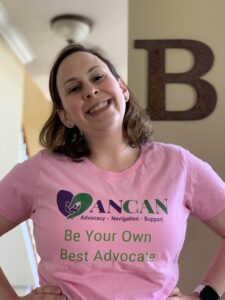 For those that have been around AnCan for a while, the name Lindsey Byrne should be familiar. Lindsey is a Genetic Counselor at The Ohio State University (James) Comprehensive Cancer Center who specializes in prostate cancer. Click this link, and you’ll see everything she has done with AnCan!
Lindsey recently participated with Janssen Biotech, soon to be referred to as just Johnson & Johnson (JnJ), to make 3 short videos on the implications of the BRCA gene mutation for prostate cancer. This is part of a non-branded education effort as JnJ introduces its newly approved single pill, AKEEGA, that combines PARP-Inhibitor niraparib with ARSI, abiraterone acetate. Lindsey doesn’t just talk the talk; she walks the walk – ask her patient, frequent AnCan participant, Frank Fabish pictured together right. AnCan, btw, is also indirectly connected to panelist GU med onc Cora Sternberg, who went to grade school with one of our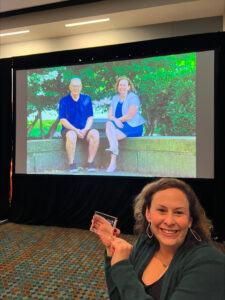 gents, and was a good family friend of another.
If the video seems a little stiff, that’s because it has to be fully scripted to meet FDA requirements for the manufacturers. That said, the information is good, understandable and accurate – although it may leave out important additional information AnCan would impart. So if you know very little about BRCA, and want to understand it better, we recommend watching these 3 short videos that you can do in les than 20 minutes. Click https://www.uncoverbrca.com/expert-video-series/index.html
Two short caveats:
- even if you don’t have prostate cancer, but your condition has a risk for BRCA mutations, the videos may be helpful. PARP-Inhibitors alone are often a treatment option when BRCA is present in any cancer.
- in full disclosure, JnJ is a significant AnCan financial sponsor. However, JnJ neither requested nor required us to promote these videos.

by Rick Davis | Dec 8, 2023 | Active Surveillance PCa, AYA, Blood Cancers, Brain Tumors, Cancer Caregivers, Cancer Resources, Complementary Medicine, Health Resources, mCRPC, Men 'Speaking Freely', Men's Breast Cancer, Mental Health, mHSPC, Multiple Sclerosis, nmCRPC, Ovarian Cancer, Pancreatic Cancer, Prostate Cancer, Recent News, RMC, Thyroid Cancer, Veterans, Women's Breast Cancer
Bang your drum… it could make you smarter and healthier!
I don’t want to work
I want to bang on the drum all day
I don’t want to play
I just want to bang on the drum all day
–Todd Rundgren
Twice in the last several months, the topic of drumming came up in our AnCan Men Speaking Freely group and it generated some excitement both times. So this month’s invite will be on that topic.In my former practice whenever I have given a non-verbal treatment there is a big relief that no talking is involved. In bypassing the verbal and left-brain systems we gain access to a typically unused part of ourselves. I wonder if we can use this approach to cope with our serious illnesses and have a better life?
Our brains have a characteristic called plasticity, the ability to change. You may have heard of this regarding the little finger brain circuit of violinists; it grows as they become proficient. Drummers also have different brains than the rest of us. They have fewer, thicker nerve fibers between the two halves of the brain. They have more efficiently organized motor cortices. (Schlaffke, 2019). Because of this, drummers can do things that we can’t. They can coordinate the two sides of the brain better, and perform motor tasks with greater efficiency. They can play different rhythms with each hand and foot at the same time.
Schlaffke’s subjects had drummed many hours per week for decades. But Bruchhage’s (2020) subjects trained for only 8 weeks and showed several changes in the cerebellum plus changes in the cortex, showing not only cerebellar plasticity but also communication and coordination between the cerebellum and brain sensorimotor areas as well as areas for cognitive control.
Drumming is very complicated, which is why it’s unfair that the lead guitar and vocal guy gets all the girls (Greenfield, J. 2022).
For some reason, there is a close association between beat synchronization (integrating auditory perception with motor activity) and reading ability in children (Bonacina, 2021). Higher synchronization ability predicts better literacy skills. Maybe early intervention involving drumming can improve literacy in kids?
Cahart et.al (2022) showed that drumming can improve behavioral outcomes for autistic adolescents and elucidated some of the neurology involved. Does this mean it could help us?
Drums have been used for millennia for healing, inducing trance, and even psyching up soldiers.
We have learned that drumming is not just about waking up the right brain, but also about connecting the sides of the brain, and the cerebellum with the cortex. It can induce alpha brain waves. It can release endorphins. Even T-cells respond to drumming (Bittman). It induces present-moment experience, which we often work toward to deal with death anxiety. Interpersonal connections are made when people drum together. Despite the effort involved, it induces relaxation. I have come across papers describing drumming and music therapy for a wide variety of emotional problems and currently, there are 8000 music therapists in the US.
How about for us? We see above the possibility of reductions in anxiety, tension, pain, isolation, depression, and over-thinking the past and future. There are many studies of music therapy in ICUs, with patients on ventilators, easing hemodialysis pain, with positive results. Also, helpful with narcotic use, social integration, and depression. MSKCC uses music therapy.
 With terminal cancer, there is data showing that music helps breathing, QOL, psychospiritual integration, reducing pain in chemotherapy, radiation, and helps pediatric breast and lung Ca patients (Ramirez 2018, Hilliard 2003, Burns 2015 Tuinmann 2017, Barrera 2002, Li 2011, Lin 2011). Atkinson (2020) found improvement with fatigue. I couldn’t find any studies focused only on Prostate Cancer.
Well, all this scholarly stuff is really unnecessary to anyone who ever banged a pot with a wooden spoon. Kids love it. Adults love situations where it’s OK to be wild and make noise, such as drumming circles and Pound classes. It’s just fun and feels good.
Dr. John Antonucci
Editor: Dr. John wrote this for our Men Speaking Freely Reminder on Dec 7, 2023. It’s such a perceptive, helpful and instructive piece, AnCan wanted to share it widely.

by Rick Davis | Nov 28, 2023 | Blood Cancers, Brain Tumors, Cancer Caregivers, Cancer Resources, Health Resources, mCRPC, Men's Breast Cancer, mHSPC, Multiple Sclerosis, Pancreatic Cancer, Prostate Cancer, Recent News, RMC, Thyroid Cancer, Women's Breast Cancer
Your Dental Health
 AnCan takes a holistic approach to your physical and mental health. AnCan also recognizes that a healthy mouth contributes to a stress free life… and all too often your condition, or the meds you take for it, can disrupt dental health. Some of our groups speak frequently about dry mouth (xerostomia), loss of taste (ageusia) and ONJ … osteonecrosis of the jaw.
When, Dr. Bob Gurmankin DMD, a recently retired dentist living with advanced prostate cancer, noticed the frequency with which these dental topics came up in his group, he suggested a two-step support program – 1) a handout on our website, and 2) a dental health webinar in 2024… watch out for this int he New Year.
One handout alone was not going serve all needs so Dr. Bob graciously prepared THREE to kick start our effort to help you maintain a healthy mouth.
Please download whatever is appropriate and spread the word to others who you think may benefit. Dr. Bob Gurmankin can be reached at dr.bob@rickd13.sg-host.com ; if you have questions he has kindly agreed to assist… THANK YOU DR. BOB!!!
Please participate in our Groups where you’ll find more support… onward & upwards.
Other Resources

by Rick Davis | May 22, 2023 | Active Surveillance PCa, Advocacy, Blood Cancers, Brain Tumors, Cancer Caregivers, Cancer Resources, Health Resources, hospice and palliative, mCRPC, Men's Breast Cancer, mHSPC, Multiple Sclerosis, nmCRPC, Ovarian Cancer, Pancreatic Cancer, Prostate Cancer, Recent News, RMC, Sarcoidosis, Thyroid Cancer, Women's Breast Cancer
ICE Checklist … in case you go cold!
Last month’s Under 60 Stage 3 & 4 Prostate Cancer meeting was small, intimate and produced a true gem from Down Under to benefit all AnCan’rs …
For the life of me, I forget what raised the topic … maybe a Death with Dignity discussion – but Aussie AnCan’r, Steve Cavill told us about the ICE “In Case of Emergency” Checklist Document that he and his wife Leonie, who occasionally attends our Care Partners Group, have both completed. Steve and Leonie reside in the suburbs of Melbourne and are currently heading towards mid-Winter.
This ICE Checklist takes much, if not all, the difficulty out of placing your key information in one place. Like your vital passwords to your laptop, phone or bank accounts; names of key individuals in your life and more. You know .. all that information making it possible for someone to piece your life together if you’re suddenly no longer with us.
Frankly it’s information we should all compile no matter how old. With this checklist guide at hand to march us through it, there can be few excuses. Just remember, this version of the ICE checklist was created in Oz, so it may not be fully applicable Stateside. If one of our US volunteers has time to ‘Americanize’ it, I feel sure it will be greatly appreciated – we have very few solicitors in the US and a few too many attorneys!
Here’s the checklist document in Word format ICE Document Template Now do your part …. and a BIG THANK YOU, Steve Cavill!!