(Here is my take on this article Therapeutic Use of Cannabis and Cannabinoids A Review JAMA Network, 11/26/25. On a personal side, I use CBD to help me sleep, and with a little (5%) addition of THC, it is a great anxiety calmer – Sally Torgeson, AnCan Blood Cancer Moderator & Multiple Myeloma Coach)
Unapproved Cannabis
The FDA has NOT approved the cannabis plant (botanical marijuana) for any medical use or indication.
Because it is classified as a Schedule I controlled substance under federal law, the FDA has not found it to be safe or effective for the treatment of any disease or condition [1.1, 1.7].
It is currently illegal to market CBD by adding it to food or labeling it as a dietary supplement in interstate commerce [2.1, 2.5].
FDA-Approved Cannabinoid Drugs
The FDA has approved a small number of prescription drugs containing either a purified cannabis-derived compound or synthetic cannabinoids:
Epidiolex (Cannabidiol or CBD): The only FDA-approved drug that contains a purified substance derived directly from the cannabis plant. It is approved to treat seizures associated with Lennox-Gastaut syndrome, Dravet syndrome, and Tuberous Sclerosis Complex in patients one year of age and older [1.8, 2.1].
Marinol and Syndros (Dronabinol): Contain synthetic Δ9-tetrahydrocannabinol (THC). Approved for:
Nausea and vomiting associated with cancer chemotherapy in patients who have not responded to conventional antiemetic treatments [2.2, 2.3].
Anorexia associated with weight loss in patients with HIV/AIDS [2.3].
Cesamet (Nabilone): Contains a synthetic substance that is chemically similar to THC. Approved for chemotherapy-induced nausea and vomiting [1.1, 2.3].
Regulatory Context
The FDA maintains its authority to regulate products containing cannabis or cannabis-derived compounds, even those derived from hemp (cannabis with less than 0.3% THC), under the Federal Food, Drug, and Cosmetic (FD&C) Act [1.4].
The FDA supports the development of new drugs through proper clinical trials to ensure they meet standards for safety and effectiveness [1.1, 2.4].
FDA-Approved Cannabinoid Drugs and Their Conditions
* Nausea and vomiting caused by cancer chemotherapy (when other antiemetics have failed) * Anorexia (loss of appetite) associated with weight loss in patients with HIV/AIDS
Cesamet (Nabilone)
Synthetic cannabinoid (similar to THC)
* Nausea and vomiting caused by cancer chemotherapy (when other antiemetics have failed)
Key Takeaway
Epidiolex is the only drug approved that contains a substance derived directly from the Cannabis plant (CBD). It represents the strongest evidence for cannabinoid efficacy in reducing seizure frequency in certain rare forms of epilepsy [1.1, 1.2].
The synthetic THC compounds (Dronabinol and Nabilone) are used primarily as a last resort for severe nausea/vomiting related to chemotherapy and for appetite stimulation in AIDS patients [1.2, 2.8].
The FDA has not approved the use of the whole cannabis plant for any medical condition, stressing the importance of standardized, tested pharmaceuticals for patient safety and proven effectiveness [1.7].1
Off-Label Use vs. Unapproved Use
1. Off-Label Use (Legal and Regulated)
This applies only to drugs that the FDA has already approved.
What it is: Using an FDA-approved drug (like Epidiolex, Marinol, or Cesamet) for a condition, dose, or patient population that is not specifically listed on the drug’s official label.
Legality: It is legal for a licensed physician to prescribe an approved drug for an off-label use if they believe it is medically appropriate for their patient.
FDA Position: The FDA does not regulate the practice of medicine; however, the manufacturer cannot market or promote the drug for the off-label use. The safety and efficacy for the off-label use have not been verified by the FDA’s rigorous testing process.
Example: A doctor prescribing Marinol (Dronabinol), which is approved for nausea from chemotherapy, to a patient for chronic pain. The drug is approved, but the condition (chronic pain) is not on the label.
2. Unapproved Use (Non-FDA Approved Products)
This applies to the cannabis plant itself and most CBD/cannabinoid products on the market.
What it is: Using the whole cannabis plant (botanical marijuana) or non-FDA-approved cannabis-derived products (like most CBD oils, edibles, or topicals) for any medical purpose.
Legality:
Federal: The whole plant is a Schedule I controlled substance and is not federally approved for any medical use.
State: Use may be legal under state medical or recreational cannabis laws, but this does not change its status as an unapproved drug under federal FDA law.
FDA Position: The FDA considers these products unapproved drugs and/or illegally marketed products (especially when CBD is added to food or marketed as a dietary supplement), as they have not been tested for safety, effectiveness, or quality assurance.
Example: A patient using a CBD tincture (which is not Epidiolex) to treat anxiety, or using THC flower to help with multiple sclerosis symptoms.
To correspond with Sally, please send an email to info@ancan.org, and we’ll be sure to send along.
CNTV’s recent video features an interview with AnCan founder, Rick Davis. He explains that he started AnCan after his own diagnosis in 2007, after realizing inadequate support options, especially for those in remote areas. AnCan aims to eliminate barriers to entry for its various support groups, which range from cancer to chronic diseases. AnCan empowers patients to “Be your own best advocate” by providing them with the knowledge to speak confidently with their healthcare providers and offering peer-to-peer support.
“Someone I once loved gave me a box of darkness” –Mary Oliver
I was at a 12-Step-oriented workshop about grief recently, and it made me think about Men Speaking Freely (MSF). We are vaguely aware of grief in all MSF groups, it hangs over us, and we have at times focused on some specific griefs/losses, such as vitality, or a longer life. It is commonly thought that not thinking about a loss, not talking about it is the manly thing to do. Here in MSF we get relief by sharing our common losses with each other.
The presenter of that workshop, Marcia C., had some ways to specifically talk about grief that were new to me. She gave me permission to use some of her material here. She pointed out some types of losses that I hadn’t realized. For example, the loss of who I would have been if cancer didn’t happen, the grief of estrangement, loss of work, of status, of friendship; the loss of never having had something, that of aging, of trust, or of giving up something.
She said there is “unacknowledged grief” when such losses are never fully brought to consciousness. When I looked at her long list of examples I saw many that I have. We ought to watch for unacknowledged grief.
She described “non-finite” grief, which has no end-point other than death. Ours could be in that category, since as time goes by our loss increases instead of lessens.
Marcia said, ‘’Sharing your grief is a way to receive validation and compassionate witnessing. It can help you begin a path to healing and/or finding a way to live with grief.
Consider the questions below:
1. Are there griefs you haven’t realized you have or have been afraid to face?
2. Are there griefs about which you’d like to share?
3. Do you have grief practices that might be helpful to others?
4. Make a list of griefs you’ve experienced.
5. Choose a tool from the list that might help you process your grief.”
That list of “tools” was long; it included things like: write a letter or poem describing our loss…Create a ritual of letting go…Share with others who have had similar losses…Visit a place that is meaningful…Make or buy a talisman that helps you feel protected…Dance, run, yell to get your feelings out of your body…Plant something in remembrance or as a new beginning…Start a new tradition…Do an intentional funeral… These are ways to bring acknowledged, unacknowledged, and non-finite grief out for a conscious conversation. Moving from covert to overt, with the goal of making a relationship with the loss, and getting rid of the unconscious silent prolonged scream that I, for example, think I harbor.
We think of grief as emotional, but in “Dealing With the Physical Impact of Intense Grief” by Batya Swift Yasgur, the author describes the variety of physical reactions to grief. Ranging from elevated blood pressure to takotsubo cardiomyopathy — sometimes called “broken heart syndrome” — which is a “stress response that balloons the heart.” We often wonder about the reaction on our immune system, and its implications to our overall survival. In fact, probably nearly all our systems react to grief in some way.
There is a fairly new grief-related diagnosis in the Diagnostic and Statistical Manual and the International Classification of Diseases, describing a “persistent and pervasive grief response” that goes on longer than a year., and is now called Prolonged Grief Disorder. In order to be diagnosed with Prolonged Grief Disorder, a person must experience at least three of eight additional symptoms that include “disbelief, intense emotional pain, feeling of identity confusion, avoidance of reminders of the loss, feelings of numbness, intense loneliness, meaninglessness, or difficulty engaging in ongoing life” according to Columbia University’s Center for Prolonged Grief. For an adult to meet the criteria for a PGD diagnosis, the death of a loved one must have occurred at least one year ago, and the symptoms must be present most days since the loss and nearly every day for at least the last month.
Our situation is different from losing a loved one (although it includes that) and waiting for the grief to go away. Instead of a major loss which goes farther and farther into the past, our major loss is in the future. We have sort of a reverse Prolonged Grief Disorder. For instance, I expect my losses to get worse and worse until death.
AnCan Foundation, the innovator of virtual support groups, is coming to our 10th Anniversary in less than 10 months. We’ve grown – about one-third of US nonprofits fail in that time, and we have flourished. Starting with 3, or was it 4, meetings, AnCan now boasts 33 virtual monthly events for 16 different conditions. If that’s not evidence enough, annually we serve around 7,000 live; approx. 33,000 through our recordings, and we have close to a half-million who make contact with the AnCan logo somehow or other annually. That’s a lot. Watch out for our new Impact Report that’s in the works.
It’s certainly more than one person can handle. In fact, it’s more than myself, a volunteer, plus 4 contract people and an outside bookkeeper can handle. I’m not the only volunteer. I am so honored and privileged to say it’s more than around 100 volunteers can handle, and we could not manage without your efforts – much gratitude.
For some time, the executive function has been too much for me to manage alone, even with the help of our volunteer Executive Board made up right now of Bill Franklin, David Muslin and Stuart Jordan – btw, we’re looking to add to that too. We’ve been looking to hire executive help and the perfect solution has presented itself.
Some of you may be aware of the term, Fractional Executives – The Charity CFO just ran a podcast. AnCan has been fortunate enough to find one who knows us intimately. Courtesy of the USAF and subsequently, extensive consulting experience at The Mitre Corporation, our Board President, Bill Franklin, is voluntarily reducing his hours at Mitre to take on a contract position of 16-20 hours a week with lil’ ol’ AnCan.
As our Board President since August 2021, Bill knows all the ins and out, he’s seen us grow, and most significantly he’s willing to work with me! Bill’s also looking to phase out of Mitre and find new challenges as he approaches retirement. AnCan provided a great solution and we welcome him as our new Chief Operating Officer.
Bill will continue as Board President as well as assuming oversight over many of the operating and administrative duties, from finance and control to insurance, compliance and many special projects – viz. the Impact Report !?! To be honest, Bill’s been doing a lot of this informally but can now spend legitimate time a couple of days a week to help us put our ship, or maybe we should say ‘our bird’, in better order.
Personally, I am thrilled and excited. There’s no one I can think I would rather work with. I welcome him sharing this job with me, and keeping me on the straight and narrow as he has done since joining the Board many years ago. One other person to thank – another aviator, Bill’s wife Misa. If she hadn’t gotten on his case for spending many volunteer hours with AnCan, Bill wouldn’t have come up with this great solution.
Welcome aboard, Sarge… or should I say, Mr. Prez! AnCan welcomes Air Relief
Has eating become a challenge due to fatigue or a lack of interest in food? Have you noticed a significant change in your or your loved one’s appearance since starting treatment or diagnosis?
It’s a common misconception that weight loss during cancer treatment is solely due to treatment side effects. While this can certainly be a factor, a more serious condition known as cachexia (kuh·kek·see·uh) can significantly impact a patient’s health.
What is Cachexia and Who is at Risk?
Cachexia, often referred to as cancer cachexia or wasting syndrome, is a complex condition characterized by severe weight loss, muscle wasting, and loss of appetite. It’s not a direct side effect of cancer treatment but rather a consequence of the cancer itself. While it’s commonly associated with cancer, it’s important to note that cachexia can affect individuals with various chronic illnesses, including: Multiple Sclerosis, Sarcoidosis, heart failure, chronic kidney disease, COPD, and more. Certain types of cancer are more likely to lead to cachexia than others. These include: Pancreatic, Lung, Head and Neck, Colorectal, Ovarian, and Liver.
Signs and Symptoms of Cachexia: What Should You Look For?
Recognizing the signs of cachexia is crucial for early intervention and effective management. Here are some key symptoms to watch for:
Unexplained weight loss: A significant and unintentional decrease in weight.
Muscle loss: A noticeable loss of muscle mass, often leading to weakness and fatigue.
Decreased appetite: A reduced desire to eat, even when hungry.
Fatigue: Persistent tiredness and a lack of energy.
Metabolic changes: Alterations in metabolism, including changes in appetite, weight, and energy levels.
Changes in Routine: Unable to do the activities you once could.
If you or a loved one is experiencing these symptoms, it’s important to let your care team know your concerns as soon as possible.
Managing Cachexia
While there’s no one-size-fits-all solution, a multidisciplinary approach can help manage the condition. This may involve:
Dietary interventions: A registered dietitian can provide personalized meal plans to maximize nutrient intake.
Medical treatments: In some cases, medications may be prescribed to stimulate appetite or reduce inflammation.
Supportive care: This includes strategies to manage pain, fatigue, and other symptoms.
Psychological support: Counseling can help address emotional challenges associated with cachexia.
This may mean adding more people to your careteam to support you, such as a dietician (as shown above), physical or occupational therapist, endocrinologist, or palliative care (editors note: we hope you already have a palliative care doctor, AnCan loves them and they can offer you so much support during your treatment!)
Coping with the Emotional Impact
Cachexia can take a significant toll on both physical and emotional well-being for the patient, care-partner, and their families. It’s important to seek support to manage the emotional side effects of the condition. Consider:
Counseling: Individual, couples, or family therapy can provide guidance and coping strategies.
You can also ask your social worker (or for a social worker if you do not have one) for additional resources.
Want to Learn More?
We highly recommend this webpage and fact sheet from our friends at Cancer Support Community / Gilda’s Club. While it is cancer centric, all of the information will be of helpful no matter what your diagnosis is.
By understanding the complexities of cachexia and seeking appropriate support, individuals can significantly improve their quality of life. Effective management of cachexia can help alleviate debilitating symptoms, enhance overall well-being, and improve the ability to participate in daily activities.
Special thanks to CSC for their assistance and incredible resources with this blog post.
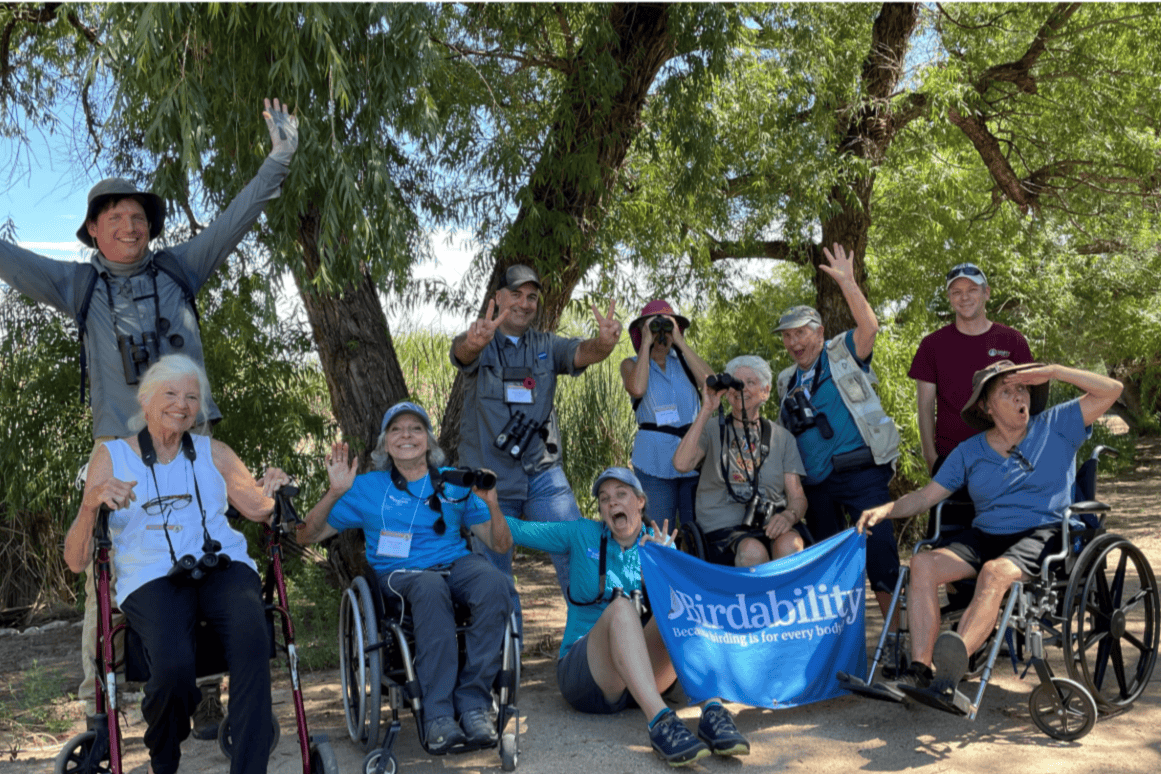
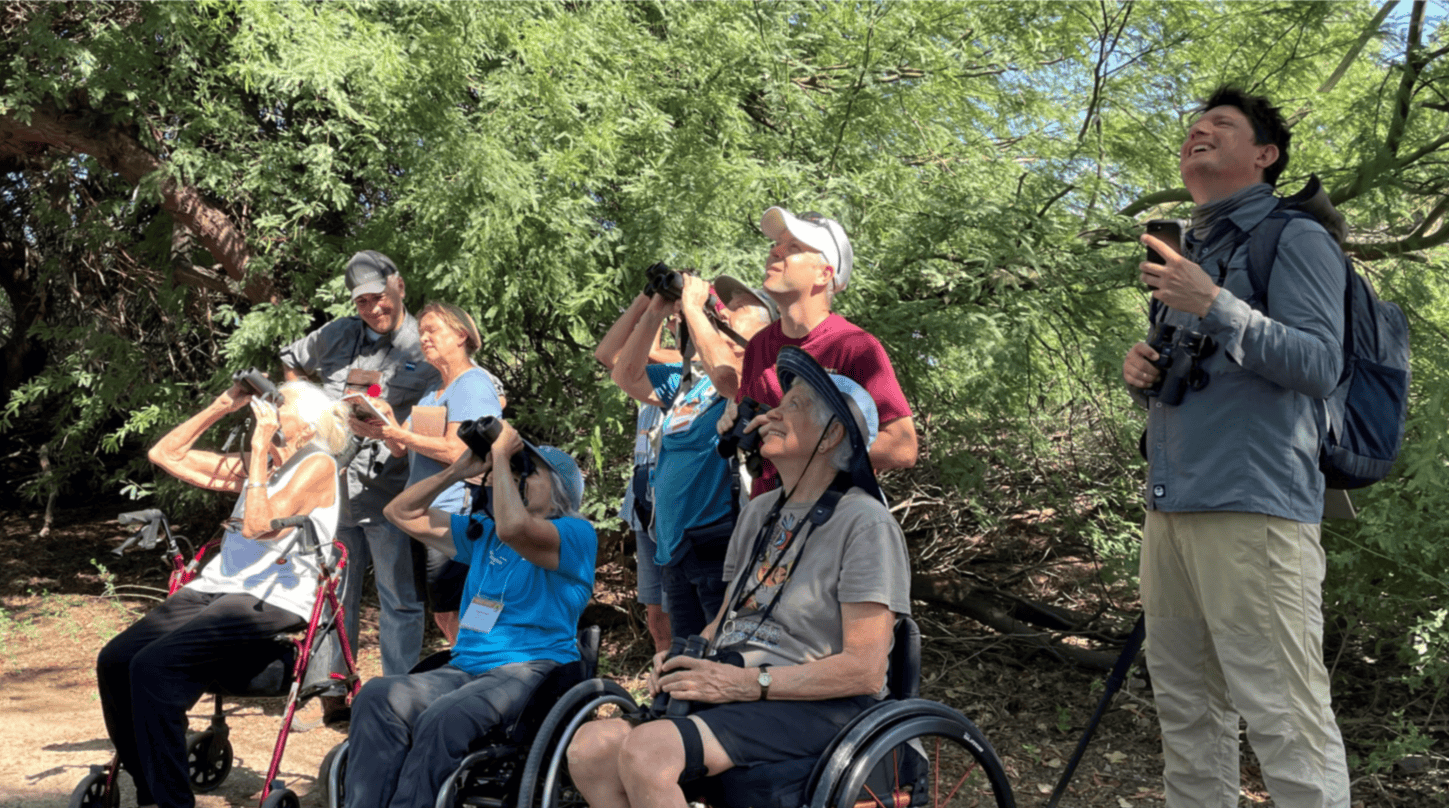
Birdability: Accessibility and Inclusiveness in The Outdoors
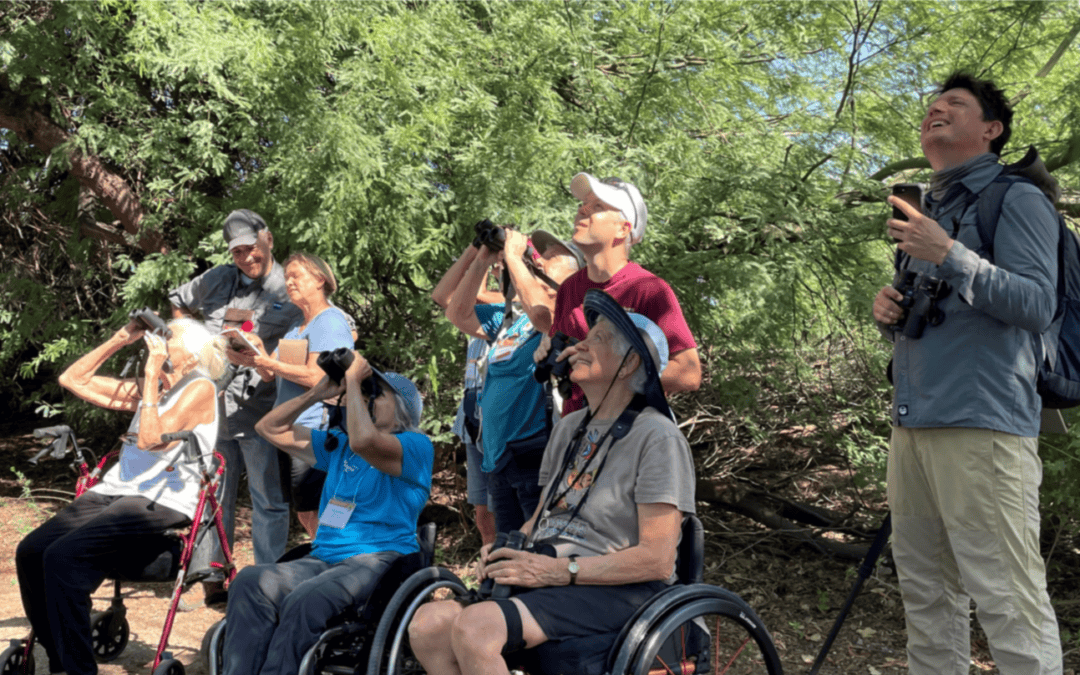
If you’ve ever been to one of the AnCan art classes, you might know me as the art/ painting instructor. It’s me, hi! I’m the kind of person who likes to make it my business to remind everyone to take a deep breath and smell the roses. Maybe paint the roses, too. Do something you love to do. That’s easy to say to an able-bodied person. What if you’re not quite an able-bodied person, but you still adore outdoor activities, like bird-watching?
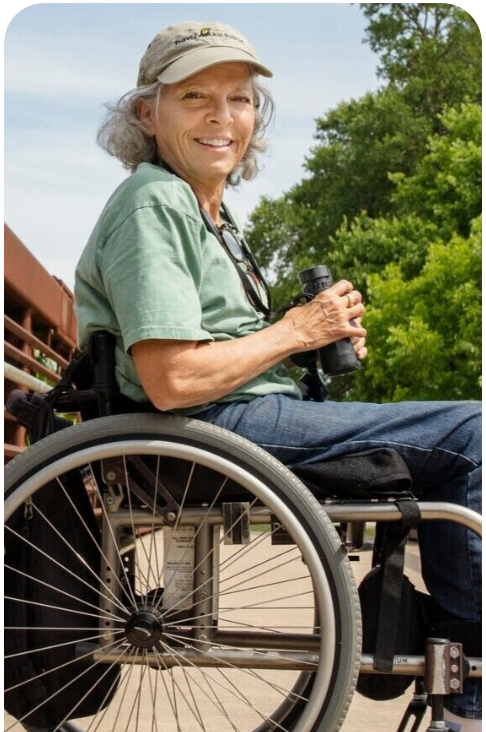
That’s where Birdability comes into the picture! Meet Virginia Rose; Birdability’s Founder and Chair Emeritus. Virginia fell off a horse when she was a teenager, and has been a wheelchair user ever since. She and Rick Davis had a chance encounter at the grocery store recently when he helped her reach a bottle of champagne from the shelves. That’s where he learned all about Birdability and Virginia’s passion for merging accessibility with her love for birds and natural spaces.
Birdability works hard to call attention to the need for accessible spaces and an inclusive mindset in places that aren’t traditionally thought of as accessible: the outdoors.
“Often it is the environment that is disabling, rather than the person who is disabled” – Birdbility
Their entire mission is to bring the joys of birding and the outdoors to those who may not otherwise be able to experience it. Birding was a hobby that Virginia really leaned into and it helped her to “discover her best self in nature”. Birding can be for anybody and and body; it’s up to the abled to be welcoming to those who may not be as abled.
Even if you, or a friend, have some visual impairments, there are guides on how to bird watch with limited vision; including using sounds and tools to help with your identification. Maybe some of our VSS people can benefit?
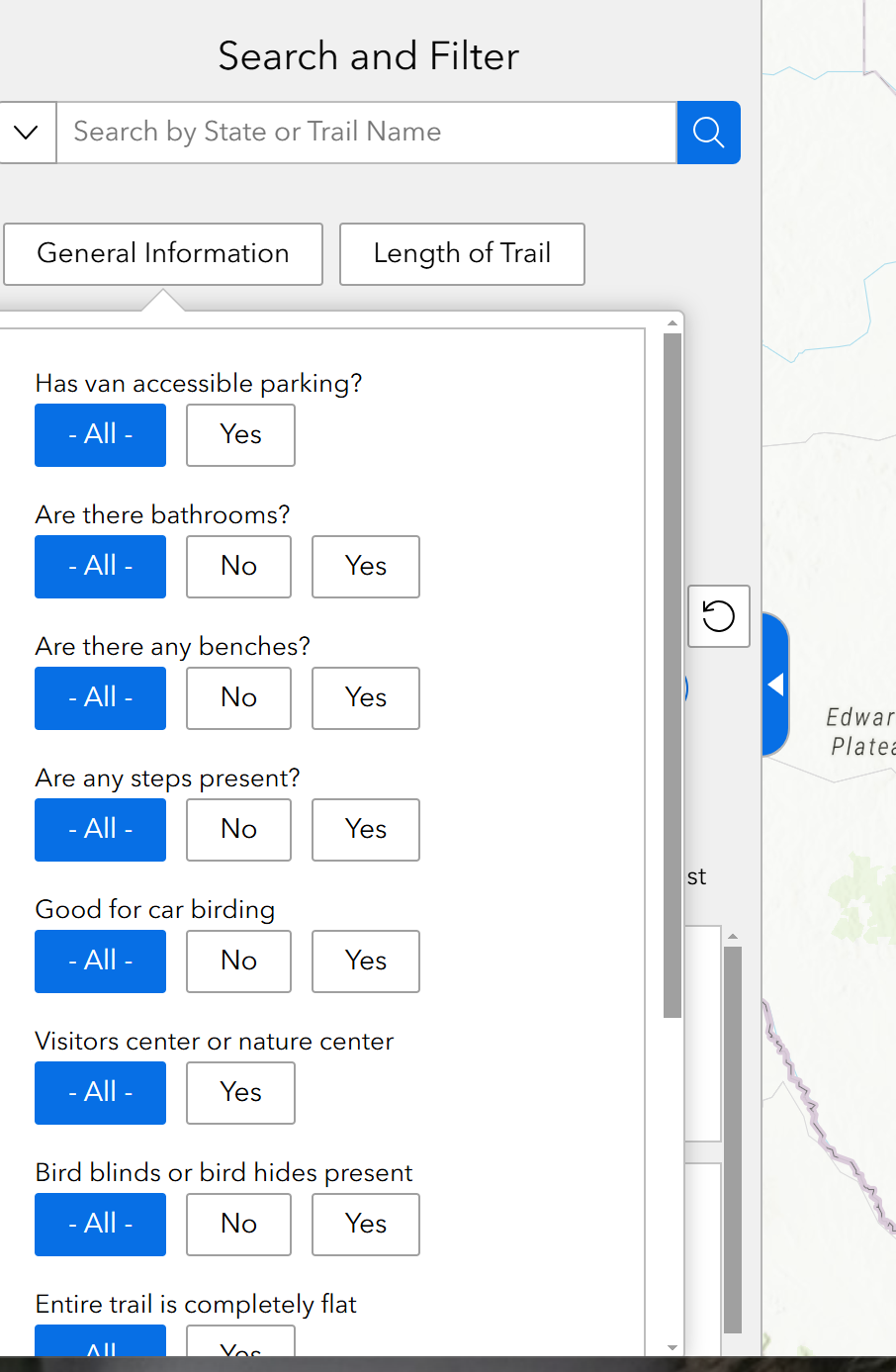
Probably my favorite feature, however, has to be the birding map, which was made in partnership with the National Audubon Society and local contributors. It’s a map intended to help locate accessible trails and outdoor spaces throughout the world. You can filter through so many different features, including surface type (asphalt, concrete, gravel, etc), bathrooms along a trail, parking fees, car birding, and so much more.
I scrolled through other continents just to see what’s out there. I’m sad (but not surprised) to see that there’s not much in he way of accessibility outside the United States, Canada, and Europe. I’m sure there are more parks and places that can be added. I think this just shows how much of a necessary resource that this organization provides. Honestly, I may even use this tool myself to find accessible trails for my own outdoor activities, like painting outside in the park.
“Websites and recommendations from park staff are frequently incomplete — and so unreliable — sources of a location’s true accessibility, and what is accessible for one user may not be accessible for another.”
So many of us want to be outside, but just can’t find reliable information about how to just exist outside. It’s easy to say that an outdoor area has accessible pavement, for example, but is the concrete well-managed and actually accessible for a wheelchair or cane user? Is it on a slope? Are there van-accessible parking spaces? Is there enough shade from the sun? Are there food trucks or other snack/food options? So many things to consider.
That’s where you, if you’re interested in birding, can come in and organize a fun local meetup. You have the tools you need right here!
Anyway, hopefully it isn’t too cold for you to be outside just yet! Go check out Birdability and their Blog and tell us what you think!

 Off-Label Use vs. Unapproved Use
 AnCan Foundation, the innovator of virtual support groups, is coming to our 10th Anniversary in less than 10 months. We’ve grown – about one-third of US nonprofits fail in that time, and we have flourished. Starting with 3, or was it 4, meetings, AnCan now boasts 33 virtual monthly events for 16 different conditions. If that’s not evidence enough, annually we serve around 7,000 live; approx. 33,000 through our recordings, and we have close to a half-million who make contact with the AnCan logo somehow or other annually. That’s a lot. Watch out for our new Impact Report that’s in the works.