Helpful Tips to be Your Own Best Medical Researcher
AnCan asked Mike Wyn, a valued AnCan Frequent Flyer and intrepid researcher, to provide a little navigation to those who are new to research… as well as useful tips for some old hands like myself. I’ve already gathered some research nuggets from Mike’s wisdom… thank you, Mr. W.
Here are a few tips ensure the medical information you are researching is reliable and accurate
Book Research
Check the publication date: authors may need at least a year to write a book, and the average time between a book’s acceptance and its publication is typically between 9 to 12 months. Hence, the data may already be outdated when it hits the shelves
Professional Presentations
Check the credentials, disclaimers, and disclosures of the presenters. Who is the author? What is the sponsoring organization providing the information? Preferred sources are from reputable institutions, such as universities, hospitals, or government health agencies.
Google Web Searches
Use command “site:” to limit you search to top-level domains like .gov, ,org and ,edu. For example, type: latest NCCN guidelines for prostate active surveillance site: .gov OR site: .org OR site: .edu
Be cautious with .com sites unless they are from recognized and credible entities. Medical databases such as PubMed, Cochrane Library, and Google Scholar are good sources for cross-referencing scientific research.
Articles, Online Posts
Check articles, online posts, videos etc. for their sources, including scientific studies, medical journals, or clinical trials. Information from peer-reviewed journals is typically more reliable than content from non-peer-reviewed sources. Poor reviewed means that other people similarly qualified to the author have reviewed teh article adn provided comments.
Anecdotal Evidence
Anecdotal evidence is information that has been observed by the person reporting but not verified. Be skeptical of anecdotal evidence such as personal stories. It is not scientifically reliable. Focus on information supported by scientific evidence and clinical studies. The quality levels of evidence from highest to lowest for medical data are:
Systematic reviews: collect and evaluate all available data/evidence within the researchers’ criteria. An example is the “Cochrane Database of Systematic Reviews”. Meta studies are a systematic review.
Randomized controlled trials: participants are randomly assigned to experimental and control arms. The double-blind trial is the gold-standard of medical research where neither the participants nor the researchers know the placebo or medication/treatment is given. This is to prevent bias and to ensure the validity and reliability of the study.
Cohort observational study: participants with common traits or exposure to the proposed medications or treatments are followed over a long period of time.
Case study or report: a detailed report of result after treatment of an individual. This is formalized and reviewed anecdotal evidence.
Medical Trial Reports
The phases of medical trial studies cited by published medical papers are:
Pre-clinical studies: laboratory experiments using cell cultures, animal or computer models. In vitro means tested In Vitro – literally ‘in glass’ means testing outside a living organism, in a test tube or petri dish, In Vivo – literally in life -means testing in a living organism, often mice. Then studies move on to humans…
Phase I trials: assess safety, dosage and side effects of the proposed medications or treatment.
Phase II trials: expand P 1 to evaluate efficacy of the proposed medications or treatment – how well it works..
Phase III trials: confirm efficacy, safety, dosage and to evaluate side effects of the proposed medications or treatment in much larger samples. This is often where randomized blind and double blind design is used. Blind means the patient does not know what they are getting; double blind means neither the patient nor the clinician know what is being dosed.
Phase IV trials: monitor long term effectiveness and safety of the medication or treatment.
Statistical Terms
Some terms regarding statistical data cited in medical journals are explained as follows:
N = the number of participants: be wary of studies with a very low N.
HR = hazard ratio: HR=1 – there is no change in the proposed medication/treatment compared to control baseline. HR<1 – there is a reduction of risks with the proposed medication/treatment. HR>1 – there is an increase risk with the proposed medication/treatment.
CI = Confidence Interval: A trial shows that a particular drug has a 20% effect within a certain time frame with 95% CI. This shows that the study, if repeated many times, it will be 95% confident that the 20% reduction will be consistently observed.
P-value = Probability Value: This measures how strong the evidence is that the hypothesis, or effect being tested, is correct, rather than the result being random, or incorrect (null hypothesis). We seek a P-value that is <=0.05 meaning that there is a 95% or better likelihood the result is attributable to what is being tested..
Editor’s Note: We know you’ve missed receiving email notifications about our blog posts. Now that we are up and running on the new system via mailchimp (the same system you receive our group reminders on), here are the posts may have missed. They are categorized for your connivence. Enjoy!
Hi-Risk/Recurrent/Advanced PCa Video Chat Recordings
Established in 1973, the Sidney Kimmel Comprehensive Cancer Center at Johns Hopkins has been committed to advancing the understanding of human cancers and developing more effective treatments.The National Cancer Institute (NCI) recognizes this Center as a Comprehensive Cancer Center, highlighting its involvement in clinical and laboratory research, education, community outreach, and cancer prevention.
In this video, specialists from the Johns Hopkins Kimmel Cancer Center offer a nutritional guide for patients with a pancreatic cancer diagnosis.
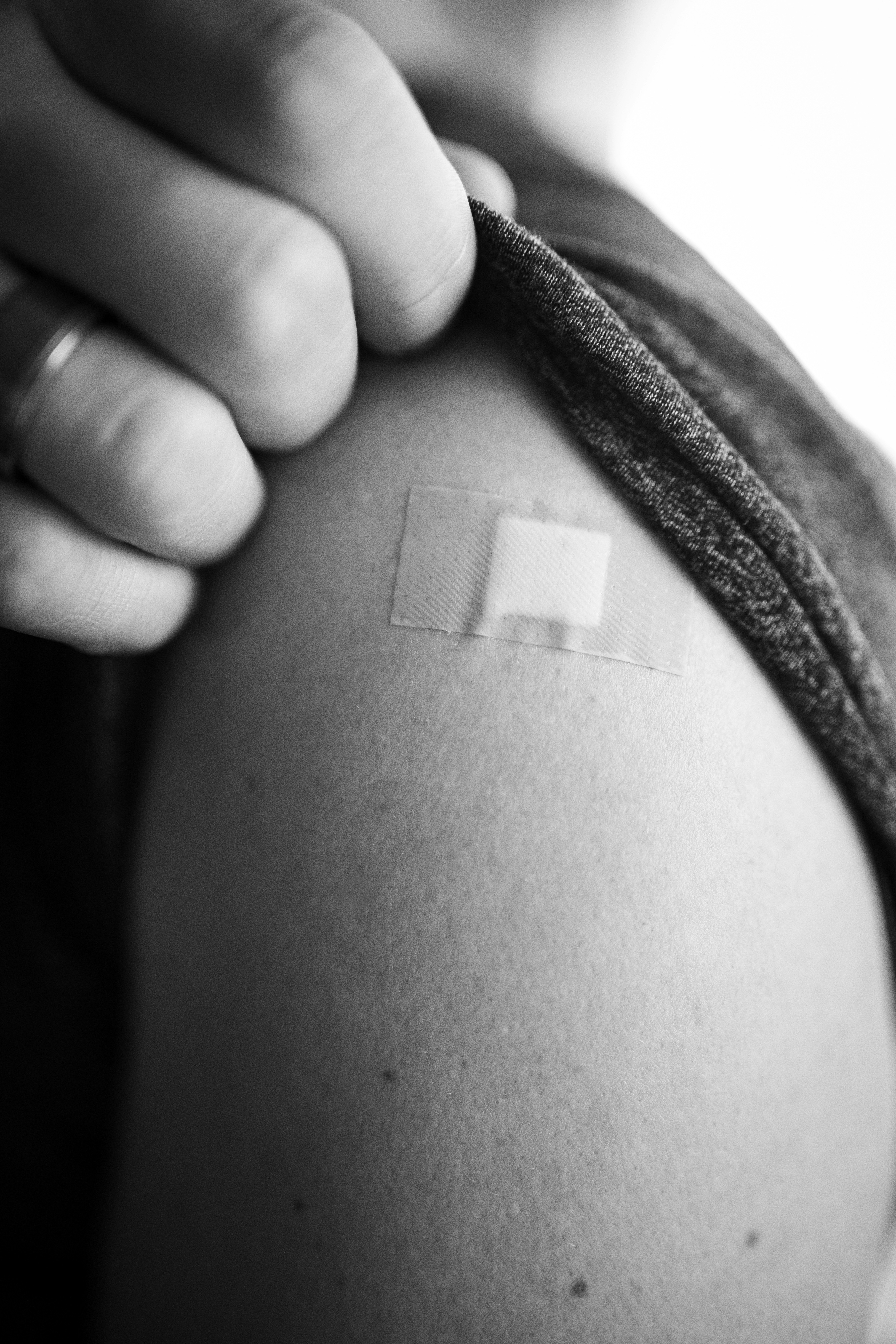
Oh it’s not that kind of shot. It’s the other kind of shots, which require some modification for people with cancer. It just
so happens that ASCO (American Society of Clinical Oncology) has come out with new guidelines regarding vaccines for cancer patients.
The guidelines include a recommendation for doctors to take vaccination histories at the start of cancer treatment, followed by provision of recommended vaccines, re-vaccination after cancer treatments that wipe out immunity (for instance stem cell transplant), as well as vaccination of household contacts in order to protect the cancer patient.
We are more vulnerable to infection, because our immune system is injured by chronic inflammation, by the cancers, and by our treatments. Also, we don’t get as good an immune boost from some vaccines as people without cancer do.
If our immune system is “compromised” we can’t take live vaccines at all, and non-live vaccines aren’t as effective. Live vaccines contain weakened but still replicating virus or bacteria. They cause a mild infection in normal people, which triggers an immune
response. But for those of us with a weakened immune system, live vaccines, such as chicken pox/shingles, measles, mumps, oral typhoid, and German measles, can cause a real infection. Non-live vaccines are safe, including the new RNA vaccines. Non-live vaccines for different conditions can be given on the same day.
Here is a summary of recommendations, which I have shortened for prostate cancer:
“Clinicians should determine vaccination status and ensure that adults newly diagnosed with cancer and about to start treatment are up to date on seasonal vaccines as well as age- and risk-based vaccines
Vaccination should ideally precede any planned cancer treatment by 2-4 weeks. However, nonlive vaccines can be administered during or after chemotherapy or immunotherapy, hormonal treatment, radiation, or surgery
Adults with solid and hematologic cancers traveling to an area of risk should follow the CDC standard recommendations for the destination Note. Hepatitis A, intramuscular typhoid vaccine, inactivated polio, hepatitis B, rabies, meningococcal, and nonlive Japanese encephalitis vaccines are safe
It is recommended that all household members and close contacts, where feasible, be up to date on vaccinations “
Here are some specific recommended immunizations for adults with Cancer:
One dose of Tdap, followed by Td or Tdap booster every 10 years
Hepatitis B
19-59 years: eligible 60 years and older: immunize those with other risk factorsc
For adults 20 years and older, use high antigen (40 µg) and administer as a three-dose Recombivax HB series (0, 1, 6 months) or four-dose Engerix-B series (0, 1, 2, 6 months)18
Recombinant zoster vaccine
19 years and older
Two doses at least 4 weeks apart
Pneumococcal vaccine
19 years and older
One dose PCV15 followed by PPSV23 8 weeks later OR One dose PCV20d
HPV
27-45 years: shared decision making
Three doses, 0, 1–2, 6-monthsAbbreviations: HPV, human papillomavirus; PCV, pneumococcal conjugate vaccine; PPSV-23, 23 valent Pneumococcal polysaccharide vaccine; RSV, respiratory syncytial virus; Td, tetanus and diphtheria; Tdap, tetanus, diphtheria and pertussis.
a Live attenuated influenza vaccine, which is administered as a nasal spray, cannot be given to patients with cancer.
bTdap has lower amounts of diphtheria and pertussis toxoid and is only used for those 7 years and older. DTaP, the pediatric vaccine for prevention of tetanus, diphtheria, and pertussis, is only for children younger than 7 years.
cHIV, chronic liver diseases, intravenous drug use, sexual risk factors, incarcerated individuals.
dPatients who have previously received PCV13 only can receive one dose of PCV 20 after an interval of 1 year.
Abbreviations: HPV, human papillomavirus; PCV, pneumococcal conjugate vaccine; PPSV-23, 23 valent Pneumococcal polysaccharide vaccine; RSV, respiratory syncytial virus; Td, tetanus and diphtheria; Tdap, tetanus, diphtheria and pertussis.
a Live attenuated influenza vaccine, which is administered as a nasal spray, cannot be given to patients with cancer.
bTdap has lower amounts of diphtheria and pertussis toxoid and is only used for those 7 years and older. DTaP, the pediatric vaccine for prevention of tetanus, diphtheria, and pertussis, is only for children younger than 7 years.
cHIV, chronic liver diseases, intravenous drug use, sexual risk factors, incarcerated individuals.
dPatients who have previously received PCV13 only can receive one dose of PCV 20 after an interval of 1 year.
Now, a few further details about some common shots:
COVID
The COVID-19 vaccines protect patients with cancer, reducing the risk of severe COVID-19 illness and hospitalization. The recommendation is to receive at least one dose of the updated 2023-2024 COVID-19 vaccine. For those on therapies which diminish the immune response, ASCO recommends additional vaccine doses after 2 months. It is recommended to postpone immunization for 2-3 months for individuals who have recently had a COVID-19 infection.
FLU
It is safe to vaccinate during chemotherapy or while white cells are low. But the nasal spray flu vaccine should not be given to patients with cancer.
Pneumonia
Patients with cancer are at higher risk for pneumonia. (Blood cancers 50 times the risk!) Pneumonia vaccines reduce the chances of getting pneumonia and the need for hospitalization.
Shingles
There is a new vaccine called RZV. It is non-live so OK for us. (the previous vaccine, a live attenuated type, is not recommended for patients with cancer.) RZV should be made available to all adults with cancer. This vaccine remains immunogenic even after cancer treatment has begun.
RSV
Patients aged 60 years and older with cancer are eligible to receive the respiratory syncytial virus vaccine.
Our immunity to tetanus, diphtheria, and pertussis weakens as we age, and this decline may be accelerated after cancer treatment. It is strongly recommended that individuals diagnosed with cancer receive the Tdap vaccine if they have not been vaccinated as adults.
Why bother?
“Infections are the second most common cause of non–cancer-related mortality within the first year after a cancer diagnosis, with most of these deaths attributed to influenza and pneumonia, deaths that can be prevented throughimmunization. While patients with cancer have lower immune responses to influenza and pneumococcal vaccines, evidence supports the safety and benefits of vaccinations in reducing the severity of infections and associated hospitalizations.”
Often we will see the term “immunocompromised.” Does this apply to us? This term is not, to my knowledge, precisely defined. For those of us with prostate cancer, it usually means neutrophils (a type of white blood cell) are down below 1000 cells per microliter of blood, and is usually due to our treatments. The immune system is complex, and there are many ways to become “immunocompromised.” Anyone on chemotherapy could be considered to be immunocompromised. .Ask your oncologist if you fit this category, and if you know of a clear generally accepted definition, please write to me.
The authors sum up: “A cancer diagnosis can be overwhelming, and vaccination may not be an immediate priority in the treatment plan. However, numerous studies consistently highlight the best protection when vaccines are administered before starting cancer treatment, emphasizing the need for early vaccination.”
What’s in a Clinical Trial? – Dr. John Antonucci’s Primer
On Tuesday, February 27 a squadron of AnCan specialists attempted the impossible: to condense the essence of arguably the best scientific meeting on genitourinary cancer research in the world into 1 hour of intelligible, useful information. A couple of hundred scientific poster and oral research presentations from the American Society of Clinical Oncologists annual GU meeting (GU ASCO24), made available and understandable to us AnCan’rs? You can view their attempt as well as the slides at https://ancan.org/patient-highlights-from-the-2024-asco-gu-conference/ and judge how they managed.
To prepare for the session, a basic understanding of research is very helpful. It starts when scientists comes up with a question. For example, “Does Lupron do any good?” They then design a study to answer the question.
Types of studies:
Not every study is an experiment. In an experiment, the scientist does something to the subjects, such as try a new drug, and compare them to a control group, which doesn’t get manipulated. In observational research, the scientist studies the subjects but doesn’t do anything to them.
Randomized controlled trials (RCT) are a type of experiment that are highly thought of. If you want to find out if Lupron is any good, you can find 2 groups of subjects with prostate cancer, give one group Lupron, and the other group a placebo (ie no medicine, although you still administer the fake dose). You have to be careful that the 2 groups match, because if you accidentally put most of the healthy patients in group A, they will do better but mess up your conclusion. This is the controlled part: you have to make sure both groups match except for the experimental manipulation. This is partly done by randomizing, assigning the subjects at random to the groups. At the end, you find out how long each group lived (or some other pre-established endpoint) and make a conclusion. This type of study is an experiment. It is also prospective: you create data as you go along which makes it a good study.
One of the several types of observational studies is the cohort study. Cohort studies follow groups to see how they do. For example, you could follow 1000 men over time, and see if the smokers get more prostate cancer than the nonsmokers. This could give a clue into what contributes to prostate cancer and how to prevent it. These studies are often prospective (looking into the future) but can also be look-back, or retrospective as well. A well-known cohort study in prostate cancer is the Canary Cohort that looks at low/intermediate Active Surveillance; or the Framingham Heart Cohort.
A cross-sectional study can answer questions like, what percentage of 50-year-old men have had a PSA test? You have 500 fifty year old men answer the question, and get your conclusion. It’s at one point in time. (The opposite is a longitudinal study, following subjects over time.)
Qualitative studies don’t collect numerical data like the others. If you want to find out what life is like on Lupron, you interview lots of men on the drug and get the big picture. The opposite is quantitative, where numerical data is collected.
Naturally, it makes sense to have lots of subjects in any study so you don’t get fooled by chance. For instance, you could flip a coin twice, get heads twice, and wrongly conclude that all coin flips will be heads. So big studies are better than small ones. The number of subjects in a study is known as n. Small ‘n’smake results suspect.
The chosen study type depends on the question, the ethics, and the resources. Only an experiment, like an RCT, can make a cause-and-effect conclusion, because it’s randomized and has a control group. Other studies can discover correlation; that’s when two phenomena occur together but causation is unclear.
There are studies of studies as well: A Meta-analysis will review and combine several similar studies to make the results even more convincing. A Literature review will review many studies, pick the best, and create a summary for us.
Basic science research uses instruments like petri dishes and microscopes to study molecules or cells or tissues; these are in-vitro studies. Lupron started in basic science research. Then it progressed to animal or in-vivo studies. Treatments that look promising at this stage progress to human clinical studies.
Clinical Trial Phases
You will hear human clinical studies presented as Phase I, Phase II, or Phase III studies. According to the FDA, Phase 1 has 20 to 100 healthy volunteers or people with the disease/condition. It lasts several months and is to test for safety and dosage. About70% of drugs move to the Phase 2, where up to several hundred people with the disease/condition are studied for several months to 2 years looking atefficacy and side effects. Approximately 33% of drugs move to phase 3, where 300 to 3,000 volunteers who have the disease or condition are studies for 1 to 4 years to deeply look at efficacy and monitoring of adverse reactions.
A drug like Lupron, when it did well at all these phases, was then submitted to the FDA for approval. After approval it was still followed, in phase IV or post-marketing research, as it was given to thousand of patients. Keep the phases in mind if you volunteer to be a research subject.
Clinical tests One last thing. How do you measure if a test is any good? What if someone asks, “Is PSA any good as a test for prostate cancer?” There are two key measures to consider: sensitivity and specificity. Sensitivity asks, “If prostate cancer is present, how good is the test at detecting it?” This measures the test’s ability to identify those with the disease correctly. Specificity, on the other hand, asks, “If prostate cancer is absent, how good is the test at correctly identifying those without the disease?” This measures the test’s ability to identify those who don’t have the condition correctly. Both measures are crucial in evaluating the effectiveness of a diagnostic test.
Clinical tests can be either predictive–A predictive test is designed to predict the likelihood of a specific outcome or response to a particular treatment or intervention. –or prognostic–a prognostic test is used to estimate the likely course or outcome of a disease, regardless of treatment.
Your AnCan team looked at all those ASCO meeting presentations with an eye toward good study design, importance, whether it’s an experiment or not and if so what phase it is, is it prospective, does it have a large-n, and is it of interest to men in our group. Hopefully reading this will make it easier to understand the ramblings of our AnCan Mods.
For those that have been around AnCan for a while, the name Lindsey Byrne should be familiar. Lindsey is a Genetic Counselor at The Ohio State University (James) Comprehensive Cancer Center who specializes in prostate cancer. Click this link, and you’ll see everything she has done with AnCan!
Lindsey recently participated with Janssen Biotech, soon to be referred to as just Johnson & Johnson (JnJ), to make 3 short videos on the implications of the BRCA gene mutation for prostate cancer. This is part of a non-branded education effort as JnJ introduces its newly approved single pill, AKEEGA, that combines PARP-Inhibitor niraparib with ARSI, abiraterone acetate. Lindsey doesn’t just talk the talk; she walks the walk – ask her patient, frequent AnCan participant, Frank Fabish pictured together right. AnCan, btw, is also indirectly connected to panelist GU med onc Cora Sternberg, who went to grade school with one of our gents, and was a good family friend of another.
If the video seems a little stiff, that’s because it has to be fully scripted to meet FDA requirements for the manufacturers. That said, the information is good, understandable and accurate – although it may leave out important additional information AnCan would impart. So if you know very little about BRCA, and want to understand it better, we recommend watching these 3 short videos that you can do in les than 20 minutes. Clickhttps://www.uncoverbrca.com/expert-video-series/index.html
Two short caveats:
even if you don’t have prostate cancer, but your condition has a risk for BRCA mutations, the videos may be helpful. PARP-Inhibitors alone are often a treatment option when BRCA is present in any cancer.
in full disclosure, JnJ is a significant AnCan financial sponsor. However, JnJ neither requested nor required us to promote these videos.





 Oh it’s not that kind of shot. It’s the other kind of shots, which require some modification for people with cancer. It just

 For those that have been around AnCan for a while, the name Lindsey Byrne should be familiar. Lindsey is a Genetic Counselor at The Ohio State University (James) Comprehensive Cancer Center who specializes in prostate cancer. Click
 gents, and was a good family friend of another.